Solo Maxxing: Why Young Adults Are Choosing Peace Over Modern Dating Burnout
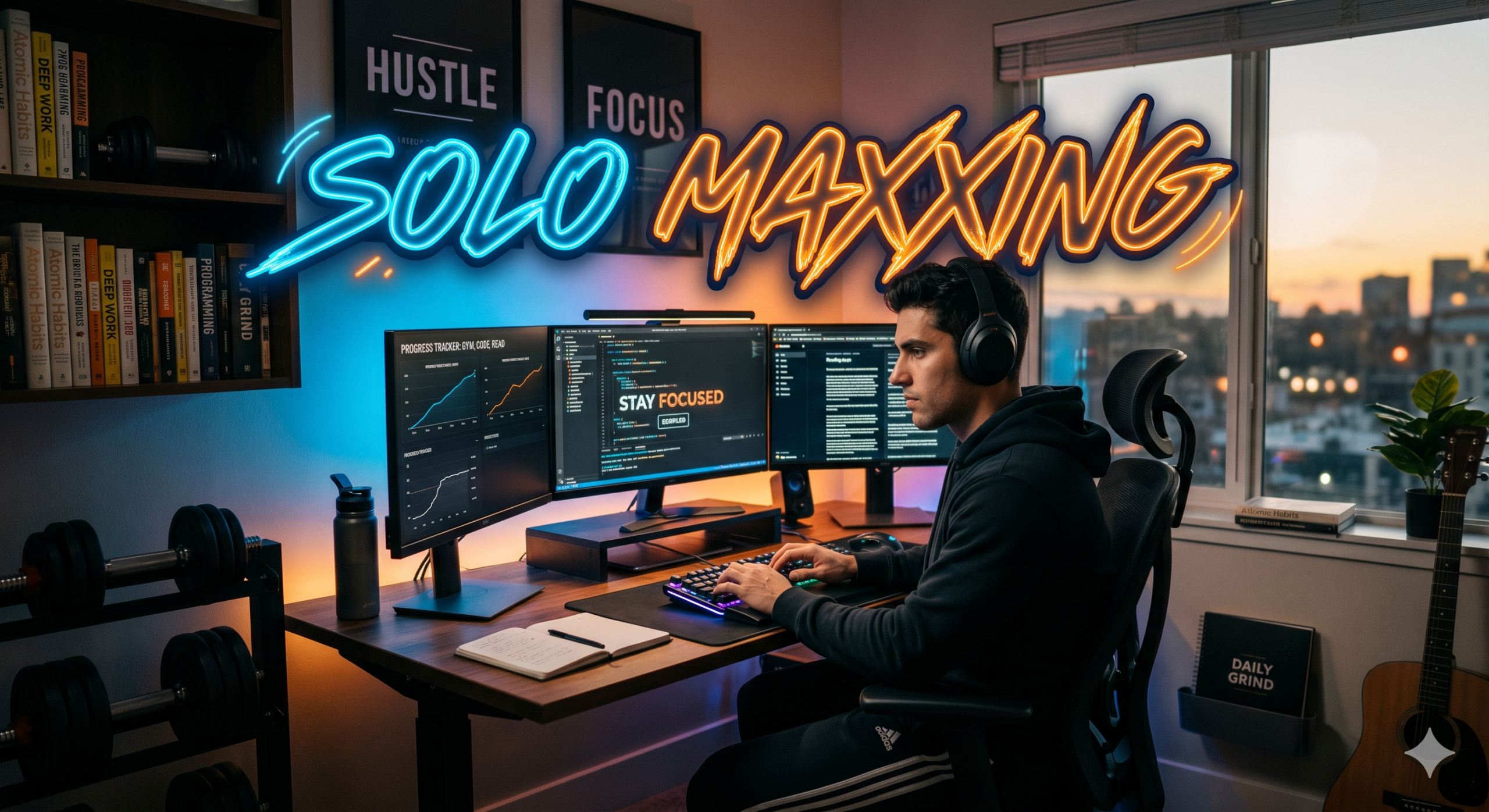
Solo maxxing is one of the newest lifestyle and dating trends gaining attention among young adults. At first glance, it may look like another name for being single. But the trend is deeper than that. Solo maxxing is about actively building a life where personal peace, emotional stability, financial focus, self-growth, and independence become more important than chasing a romantic relationship.
It is not simply about avoiding dating. It is about choosing a life structure that feels calmer, more predictable, and emotionally safer. For many young adults, being single is no longer seen as a waiting phase before love arrives. It is becoming a deliberate lifestyle choice.
As Sidhharrth S Kumaar, Relationship Coach, Therapist, and Founder of NumroVani, explains, “Solo maxxing is not the rejection of love. It is the rejection of emotional chaos being normalised in the name of love.”
What Is Solo Maxxing?
Solo maxxing refers to a lifestyle where a person focuses on maximising life outside a romantic relationship. It includes emotional healing, personal development, financial planning, career growth, fitness, hobbies, friendships, self-care, and mental peace.
The word may sound new, but the emotion behind it is familiar. People are tired of dating experiences that leave them drained, confused, anxious, or emotionally unstable. Solo maxxing gives a name to that feeling. It says that being alone can be a conscious decision, not a sign of failure.
According to Sidhharrth S Kumaar, “Earlier, singlehood was seen as a waiting room. This generation is turning it into a self-development room.”
This is why the trend is becoming so powerful. It gives young people permission to say, “I am not incomplete because I am single. I am building a life that feels safe and meaningful.”
Why Solo Maxxing Is Becoming Popular
The rise of solo maxxing is closely linked to modern dating burnout. Dating today has become emotionally demanding for many people. Apps have made meeting people easier, but they have also made relationships feel more disposable. Endless swiping, ghosting, situationships, mixed signals, comparison, and constant online availability have made dating feel less romantic and more exhausting.
Many young adults now feel that dating takes too much emotional energy without offering enough emotional safety. They are not necessarily against love. They are tired of unstable connections, unclear intentions, performative romance, and relationships that disturb their peace more than they support it.
Sidhharrth S Kumaar says, “Today’s youth is not afraid of commitment. They are afraid of committing to the wrong emotional environment.”
This is where solo maxxing enters. It gives young people a language for something they were already feeling. They would rather protect their peace than enter another emotionally draining connection.
Solo Maxxing in India: Why the Trend Is Growing
In India, solo maxxing is becoming especially relevant because young singles are no longer treating relationships as a compulsory milestone. As per NumroVani’s How India Thinks Study 2026, 78% of Indian singles are now looking toward solo maxxing or conscious singlehood as a way to protect their peace, emotional clarity, and personal growth. This does not mean Indians are rejecting love. It means they are becoming more selective about where they invest their emotions.
The reasons are very Indian in nature. Many young adults have seen unstable marriages, family pressure, painful breakups, performative relationships, and confusion around commitment. Dating apps have also added swipe fatigue, comparison, ghosting, and emotional uncertainty. For Indian singles, solo maxxing is not just about being alone. It is about protecting peace, career focus, money, mental health, and personal identity in a society where relationships still carry heavy emotional and social expectations.
As Sidhharrth S Kumaar observes, “In India, solo maxxing is not rebellion against relationships. It is rebellion against pressure-based relationships.”
This is why the trend is growing: people want love, but not at the cost of their stability.
Solo Maxxing Is Not Just Singlehood
There is an important difference between being single and solo maxxing. Being single can be a relationship status. Solo maxxing is more like a lifestyle mindset.
A person who is solo maxxing is not simply waiting for the right partner. They are investing in themselves. They may focus on career, fitness, money, travel, friendships, hobbies, therapy, spirituality, emotional healing, or personal routines. The goal is not loneliness. The goal is self-stability.
Sidhharrth S Kumaar explains, “Solo maxxing is active singlehood. It is not ‘nobody chose me.’ It is ‘I am choosing myself until love feels emotionally safe.’”
This is why the trend feels new. In the past, singlehood was often seen as incomplete or temporary. Today, many young adults are reframing singlehood as a space for power, clarity, and emotional recovery.
The Psychology Behind Solo Maxxing
From a therapist’s perspective, solo maxxing reflects a deeper emotional shift. Young adults are becoming more aware of how relationships affect their nervous system. A relationship is no longer judged only by attraction, chemistry, or social approval. It is also judged by one important question: does this connection make life feel safer or more unstable?
Many young people have seen marriages break, long-term relationships fail, breakups become common, and commitment turn fragile. They have also seen relationships become a status symbol on social media, where public display often replaces private emotional depth. This has changed the way young adults view intimacy.
For many of them, emotional peace has become hard-earned. They have worked through anxiety, career pressure, family expectations, financial stress, and digital exhaustion. So they are careful about who they allow into their life. A relationship that brings confusion, insecurity, or emotional disturbance feels like a risk they are no longer willing to take.
As Sidhharrth S Kumaar says, “The new relationship question is not only ‘Do I like this person?’ It is ‘Does this person disturb or regulate my nervous system?’”
Why Relationships Now Feel Emotionally Expensive
Modern relationships often demand more than emotional presence. They demand time, money, constant communication, digital visibility, emotional labour, and social performance. For young adults already dealing with work stress, financial pressure, and identity confusion, dating can feel like another full-time emotional responsibility.
The trauma of “what if it goes wrong?” also plays a major role. A failed relationship today does not only mean heartbreak. It may disturb sleep, work focus, self-esteem, finances, social image, and mental health. This creates an emotional entry barrier. People want love, but they fear the cost of a wrong relationship.
Sidhharrth S Kumaar notes, “Many young adults are not avoiding relationships because they hate intimacy. They are avoiding the emotional collapse that may follow if intimacy fails.”
That is why many young adults are choosing to stay alone unless a relationship feels genuinely safe, mature, and aligned.
Healthy Self-Prioritization or Avoidance?
Solo maxxing can be healthy when it comes from self-respect. Choosing yourself, setting boundaries, healing from past experiences, and refusing emotionally unsafe relationships are signs of maturity. No one should feel forced to date just to prove they are desirable or normal.
But there is another side too. Sometimes solo maxxing can become avoidance dressed up as self-care. A person may say they are choosing peace, but underneath that choice there may be fear of rejection, fear of heartbreak, fear of vulnerability, or unresolved relationship trauma.
The difference lies in openness. Healthy solo maxxing creates peace without closing the heart. Avoidant solo maxxing creates walls and calls them boundaries. If a person becomes more grounded, emotionally clear, and selective, it is healthy. If they become rigid, fearful, and disconnected from intimacy, it may be a defence mechanism.
According to Sidhharrth S Kumaar, “Self-care keeps the heart peaceful but open. Avoidance keeps the heart protected but closed.”
Solo Maxxing and the New Definition of Love
Solo maxxing does not mean love has lost value. In fact, it may mean people are taking love more seriously. Young adults are no longer willing to enter relationships only for validation, pressure, loneliness, or social image. They want relationships that offer emotional safety, clarity, respect, and growth.
The new standard is simple: a relationship must add to life, not disturb it. It must bring stability, not chaos. It must create trust, not confusion.
Sidhharrth S Kumaar explains, “The future of love will not be built on drama, chase, and emotional guessing. It will be built on clarity, safety, and mutual regulation.”
This is a major change in dating culture. Earlier, being in a relationship was often seen as a sign of success. Now, being peaceful, emotionally balanced, and self-directed is also becoming a sign of success.
Is Solo Maxxing the Future of Dating?
Solo maxxing may not replace relationships, but it will definitely change how young adults approach them. The future of dating will likely become more selective, slower, and more emotionally conscious. People will not stop wanting love. But they will expect love to prove that it is worth the emotional investment.
The trend also shows that young adults are no longer romanticising struggle in relationships. They are questioning whether constant anxiety, confusion, and emotional sacrifice should be considered normal in love.
As Sidhharrth S Kumaar predicts, “The future of dating will not be about more options. It will be about safer options. Emotional reliability will become more attractive than romantic drama.”
This is not the death of romance. It is the rejection of unstable romance.
Final Thoughts
Solo maxxing is more than a social media trend. It reflects a generation that is tired, emotionally alert, and unwilling to gamble its peace for uncertain relationships. It is born from dating burnout, digital fatigue, financial pressure, changing family structures, and the fear of emotional instability.
At its healthiest, solo maxxing teaches people to build a life they do not need to escape from. It reminds them that love should be an addition to life, not a disruption of self. But the deeper challenge is to make sure independence does not become emotional isolation.
As Sidhharrth S Kumaar concludes, “The healthiest message of solo maxxing is not ‘I don’t need anyone.’ It is ‘I am whole alone, and I will only make space for love that respects my wholeness.’”
FAQs on Solo Maxxing
What is solo maxxing?
Solo maxxing is a lifestyle trend where a person chooses to focus on independence, emotional peace, self-growth, money, career, and personal stability instead of making dating or relationships the centre of life.
Is solo maxxing the same as being single?
No. Being single is a relationship status. Solo maxxing is a conscious lifestyle mindset. It is about actively building a peaceful and stable life outside romantic dependency.
Why is solo maxxing becoming popular among young adults?
Solo maxxing is becoming popular because many young adults are tired of dating burnout, ghosting, situationships, emotional inconsistency, social media comparison, and relationships that feel unstable or draining.
Is solo maxxing healthy?
Solo maxxing can be healthy when it comes from self-respect, healing, and emotional clarity. It becomes unhealthy when it turns into avoidance, fear of intimacy, or emotional shutdown disguised as self-care.
Is solo maxxing common in India?
Yes, solo maxxing is becoming increasingly visible in India. As per NumroVani’s How India Thinks Study 2026, 78% of Indian singles are looking toward solo maxxing or conscious singlehood to protect their peace, clarity, and personal growth.
Does solo maxxing mean people do not want love?
No. Solo maxxing does not mean people are against love. It means they are becoming more selective. They want love, but not at the cost of their peace, identity, mental health, or emotional stability.
What is the biggest reason behind solo maxxing?
The biggest reason is emotional fatigue. Many young adults feel dating has become draining, uncertain, performative, and risky. Solo maxxing becomes a way to protect emotional energy and personal stability.
Can solo maxxing affect future relationships?
Yes. It can lead to healthier relationships if it helps people develop self-worth, boundaries, and clarity. But if it becomes emotional avoidance, it may make people more guarded and less open to genuine intimacy.
Is solo maxxing a Gen Z trend?
Solo maxxing is most visible among Gen Z and young millennials, but the mindset is spreading across age groups. Anyone who is choosing conscious singlehood, peace, and self-growth over draining relationships can relate to the trend.
What is the future of solo maxxing?
Solo maxxing will likely influence the future of dating by making people more intentional, selective, and emotionally aware. Relationships will not disappear, but they will need to offer safety, maturity, and real value.
Who is Sidhharrth S Kumaar and why is his view important in relationship coaching?
Sidhharrth S Kumaar is a Relationship Coach, Therapist, Astro-Numerology Expert, TEDx Speaker, and Founder of NumroVani. With 10+ years of experience, he works at the intersection of relationship psychology, emotional healing, astrology, numerology, Eastern philosophy, and modern behavioural understanding. His relationship coaching approach draws from the Vedas, Kamasutra, rare Indic wisdom traditions, relationship dharma, energy principles, and Western psychological frameworks to create his own integrated method for understanding love, intimacy, compatibility, emotional safety, and conscious partnership. His work focuses on helping individuals choose relationships that support peace, self-worth, communication, and long-term emotional stability instead of entering bonds driven by fear, pressure, or social validation.