Introduction: Why Marriage Compatibility Matters More Than Ever
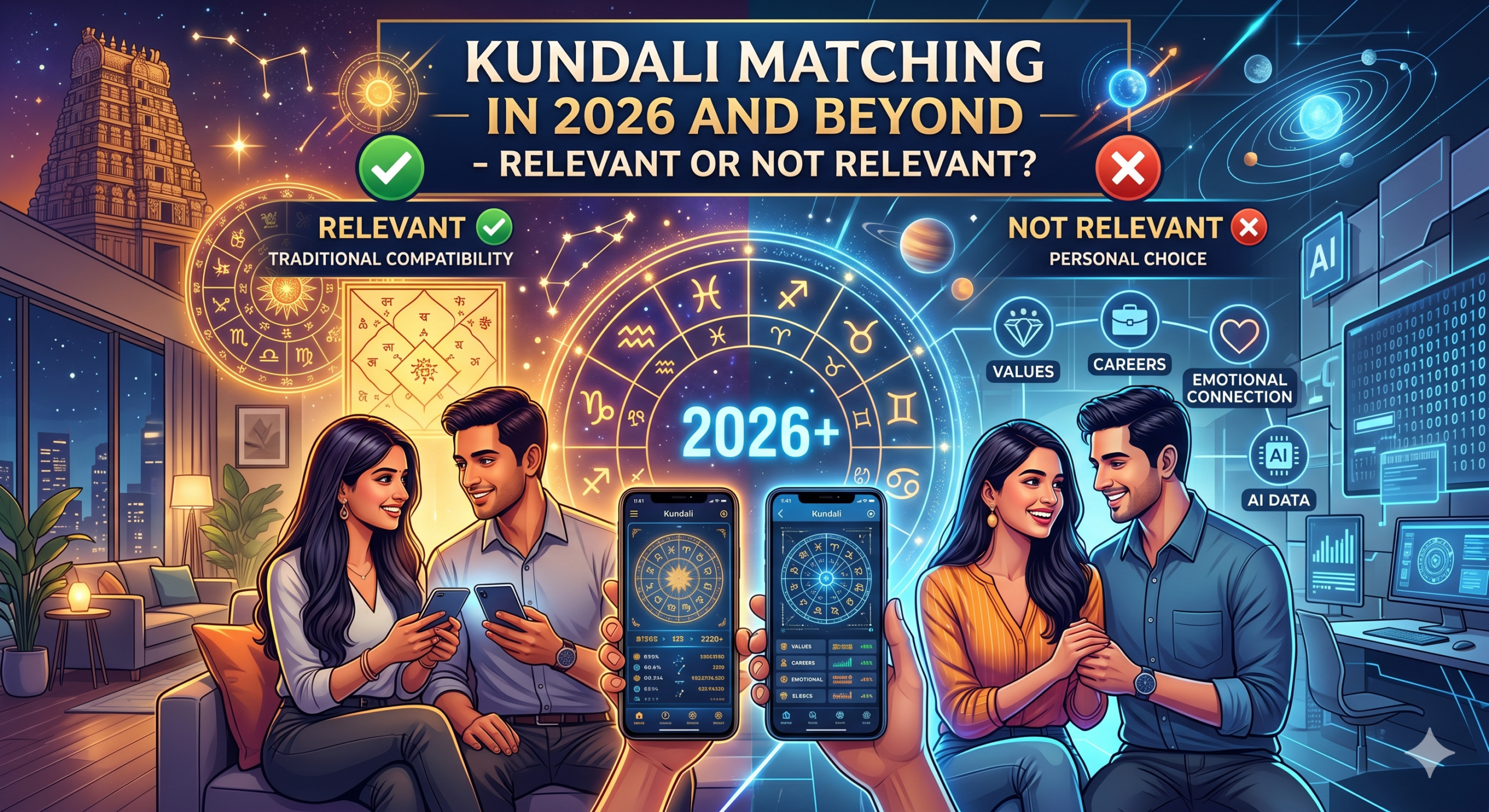
In an age of dating apps, artificial intelligence and instant communication, many assume that traditional practices such as Kundali Matching have lost their relevance. Surprisingly, the evidence suggests otherwise.
Recent surveys indicate that astrology continues to influence relationship decisions for a significant number of young Indians. A 2025 dating survey found that 51% of Indian singles believe zodiac signs play an important role in attraction and compatibility, while another 27% feel astrological compatibility matters even if it is not the sole deciding factor. The same survey revealed that nearly half of respondents had used astrology to better understand themselves or their partners.
This growing interest reflects a broader shift in modern relationships. Technology has made it easier than ever to meet people, but it has not necessarily made it easier to build lasting relationships. In fact, many young adults today are placing greater emphasis on compatibility, emotional alignment and long-term relationship potential before making a commitment.
Marriage itself has also evolved. A spouse is no longer expected to simply fulfil a social role. Modern marriages require emotional compatibility, financial alignment, mutual respect, shared aspirations, effective communication and the ability to navigate constant external influences.
Adding to this complexity are modern challenges such as social media comparisons, digital distractions, career pressures, relocation demands, delayed marriages and changing family structures. The emotional and psychological expectations from marriage have increased dramatically.
Against this backdrop, the need to understand compatibility has grown rather than diminished.
The question, therefore, is not whether Kundali Matching remains relevant. The real question is whether we have understood Kundali Matching correctly.
“Compatibility has become more important in modern marriages, not less. The challenge is that most people are using a simplified version of Kundali Matching while believing they are using the complete system,” says Sidhharrth S Kumaar, Astro Numerologist and Founder of NumroVani.
The Biggest Misconception: Gun Milan Is Not Kundali Matching
Ask most people about Kundali Matching and the discussion immediately shifts to the famous score out of 36 points. For many families, the marriage decision is reduced to whether the score crosses a particular threshold.
This understanding is incomplete.
Gun Milan, or Ashtakoota Matching, was never designed to represent the entirety of Kundali Matching. It was merely one component within a much larger framework of compatibility assessment. Over time, however, a rich and sophisticated body of knowledge became condensed into a simple scoring mechanism because it was easier to calculate, communicate and standardize.
In many ways, this represents a gradual erosion of deeper astrological understanding.
A couple may score exceptionally high in Gun Milan and still struggle with communication, expectations or life priorities. Likewise, countless successful marriages exist where the traditional score would have been considered average.
Reducing marriage compatibility to a single number is similar to evaluating an individual’s overall health through one laboratory parameter. It may reveal something useful, but it cannot reveal everything.
The challenge today is that many people mistake Gun Milan for Kundali Matching itself. In reality, Gun Milan was only one lens among many. When isolated from the broader astrological framework, it often creates a false sense of certainty while overlooking critical dimensions of compatibility.
“Gun Milan was never intended to be the final verdict on a marriage. It was one parameter among many. Reducing an entire relationship to a score out of 36 is perhaps one of the biggest oversimplifications of classical astrology,” explains Sidhharrth S Kumaar.
Kundali Matching: A Much Broader Framework
Traditional Kundali Matching extends far beyond the eight kootas.
Classical astrologers evaluated multiple layers before offering any opinion regarding compatibility. These included the condition of the seventh house, strength of Venus and Jupiter, Moon compatibility, emotional temperament, family karma indicators, health factors, financial stability, longevity considerations, Navamsha analysis, planetary periods and overall relationship potential.
The objective was not merely to determine whether two people should marry. The objective was to understand how two individual life journeys would interact after marriage.
A comprehensive compatibility assessment attempts to answer deeper questions. How do both individuals process emotions? How do they handle disagreements? What are their expectations from marriage? Will their ambitions complement each other or create friction? How will family dynamics influence the partnership?
These are questions that cannot be answered through Gun Milan alone.
Authentic Kundali Matching was never a mechanical exercise. It was a sophisticated framework designed to understand human compatibility in a holistic manner.
“Ancient astrologers were not merely matching charts; they were studying how two lives would interact over decades. That requires a far deeper analysis than numerical compatibility alone,” notes Sidhharrth S Kumaar.
The Forgotten Role of Panchang in Marriage Compatibility
One of the most overlooked dimensions of traditional compatibility assessment today is Panchang analysis.
Ancient astrologers paid considerable attention to Panchang because it reveals the qualitative nature of time itself. Tithi, Vara, Nakshatra, Yoga and Karana together create a unique energetic signature that influences behaviour, temperament, decision-making patterns and relationship tendencies.
Historically, Panchang was not viewed merely as a calendar. It was regarded as a sophisticated framework for understanding human psychology and environmental influences.
Through Panchang, astrologers could gain insights into how individuals react under pressure, approach commitments, express emotions and engage with others in close relationships.
Unfortunately, much of this wisdom has gradually faded from mainstream discussions. Modern compatibility assessments often focus on numerical scores while overlooking these deeper indicators that were once considered essential.
As a result, a significant layer of traditional knowledge remains underutilized despite its continued relevance.
“One of the most neglected aspects of modern compatibility assessment is Panchang. Earlier generations understood that compatibility was not only about people but also about the quality of time under which they were born,” says Sidhharrth S Kumaar.
If Kundali Matching Is Important, Does It Stop Mattering After 28 or 30?
A common belief circulating today is that Kundali Matching only matters when marriages occur at a younger age and that once a person crosses 28, 30 or even 35 years of age, horoscope matching becomes irrelevant.
This belief has no meaningful basis in classical astrological principles.
The purpose of Kundali Matching was never to determine whether someone is young enough to marry. Its purpose was to understand compatibility between two individuals. Emotional needs, personality traits, communication styles, relationship expectations and karmic tendencies do not disappear after a particular birthday.
In fact, these factors often become more pronounced with age.
People entering marriage later in life usually possess stronger opinions, established lifestyles, defined career goals and deeply ingrained habits. Understanding compatibility under such circumstances becomes more important rather than less.
Classical astrology evaluates the interaction between two charts irrespective of age. Whether marriage occurs at 23, 33 or 43, the objective remains the same: understanding how two individuals can create a harmonious partnership.
“Compatibility does not become irrelevant with age. If anything, it becomes more important because individuals bring stronger identities, established habits and clearer expectations into marriage,” observes Sidhharrth S Kumaar.
Why Mature Marriages Often Need Deeper Compatibility Assessment
Modern society has witnessed a significant shift in marriage patterns. People are marrying later than previous generations, often after spending years building careers, financial independence and personal identities.
As a result, marriage today involves the merging of two fully developed lifestyles rather than two individuals who are still discovering themselves.
This creates a different set of challenges.
Established routines, career ambitions, financial commitments, family responsibilities and personal expectations can influence relationship dynamics in powerful ways. Compatibility therefore becomes less about attraction and more about long-term adaptability.
A comprehensive astrological assessment can help identify where natural alignment exists and where conscious adjustment may be required.
Seen from this perspective, Kundali Matching is not about age. It is about awareness.
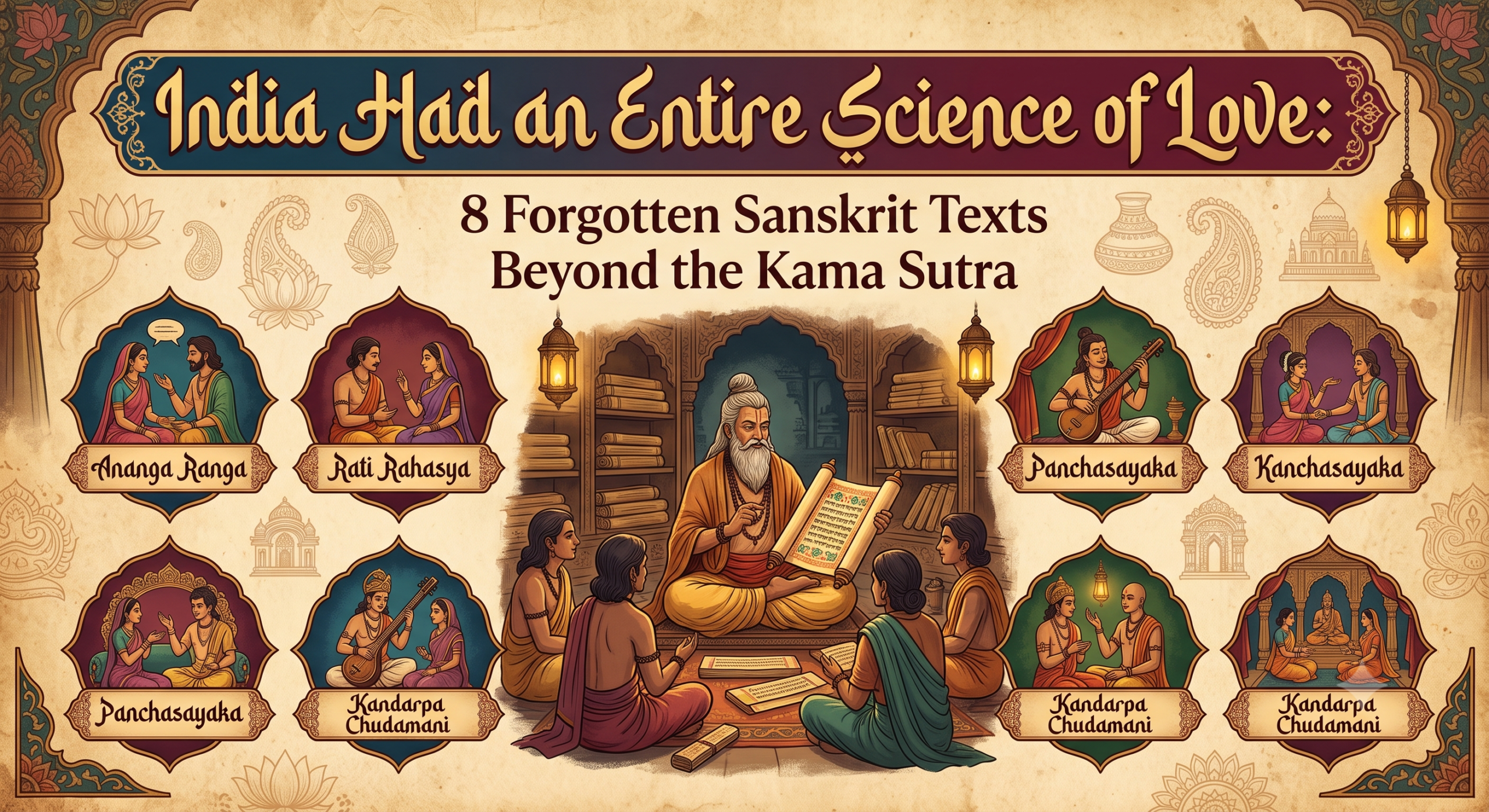
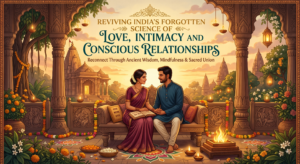
Kundali Matching and Kama Sutra: The Twin Souls of Ancient Indian Relationship Wisdom
One of the biggest misconceptions about traditional Indian relationship sciences is that Kundali Matching was meant only to determine whether a marriage should happen. Ancient Indian wisdom was far more holistic in its approach. It did not stop at identifying compatibility; it also focused on helping individuals build, nurture and sustain successful relationships.
In this larger framework, Kundali Matching and Kama Sutra can be viewed as the twin souls of ancient Indian relationship wisdom. While Jyotisha sought to understand the nature of two individuals, their emotional tendencies, strengths, vulnerabilities and areas of potential friction, Kama Shastra focused on the practical art of creating harmony, affection, understanding and fulfilment within a relationship.
In many ways, astrology functioned as a diagnostic tool. It helped identify where differences may arise, where expectations may diverge and where conscious effort might be required. Kama Sutra, on the other hand, provided guidance on human behaviour, communication, attraction, emotional connection, mutual respect, partnership dynamics and the cultivation of lasting intimacy. Together, they represented a complete framework for relationship success.
“Ancient Indian relationship sciences never stopped at diagnosis. Jyotisha helped identify tendencies and potential challenges, while Kama Shastra provided guidance on how those challenges could be consciously addressed within a relationship,” explains Sidhharrth S Kumaar.
Unfortunately, modern interpretations have reduced both traditions to narrow definitions. Astrology is often viewed merely as a predictive tool, while Kama Sutra is frequently misunderstood as a text limited to physical intimacy. Such interpretations overlook the broader vision of ancient scholars, who understood that a successful marriage required both awareness and action, both understanding and effort.
Perhaps this is the lesson most relevant for modern relationships. Compatibility alone does not create a successful marriage, just as effort alone cannot overcome every incompatibility. Ancient Indian wisdom recognized the importance of both. One system helped individuals understand the relationship they were entering, while the other helped them consciously strengthen it throughout their journey together.
The New Reality: Marriage Has Moved Beyond the Home
One of the most significant changes in modern marriage practices rarely receives attention within astrological discussions.
Historically, marriages often took place within family homes, ancestral properties, temples or community spaces that carried a strong emotional and cultural connection to the families involved.
Today, most weddings are conducted in hotels, resorts, banquet halls and commercial venues.
While these spaces provide convenience, scale and luxury, they also introduce a new reality. Commercial venues host numerous events involving different emotions, intentions and experiences. Every gathering leaves behind an energetic imprint on the environment.
Traditional Indian knowledge systems never viewed space as neutral.
Just as individuals carry energy, places also carry energy.
The transition from sacred and familiar spaces to commercial environments introduces variables that earlier generations rarely had to consider.
Why Vastu of the Wedding Venue Matters
As marriages increasingly move into commercial venues, Vastu assumes a new level of importance.
The orientation of the venue, location of the sacred fire, positioning of the stage, direction of entry, flow of movement, decorative themes, lighting arrangements and spatial harmony all contribute to the overall energy of the event.
The objective is not superstition. The objective is alignment.
When hundreds or even thousands of people gather to witness a significant life event, the environment becomes an active participant in the experience. A balanced space supports harmony, clarity and positive emotional engagement. An imbalanced environment can contribute to confusion, delays, stress and avoidable disturbances.
Modern wedding planning often prioritizes aesthetics and logistics. Ancient traditions, however, emphasized that both people and places influence outcomes.
The future of marriage compatibility may therefore require a broader perspective—one that evaluates not only the compatibility of two individuals but also the energetic quality of the environment in which their shared journey begins.
“As weddings increasingly move from ancestral homes to commercial venues, the conversation around compatibility must expand beyond individuals and include the energy of the spaces where major life events unfold,” concludes Sidhharrth S Kumaar.
The Future of Kundali Matching: Evolution, Not Rejection
The debate surrounding Kundali Matching is often framed incorrectly. The question is not whether it remains relevant. The question is whether we are willing to understand it in its original depth.
Marriage today faces challenges that previous generations could scarcely imagine. Emotional expectations have expanded, lifestyles have evolved and external influences have multiplied.
In such circumstances, a meaningful compatibility assessment becomes even more valuable.
However, reducing compatibility to a score out of 36 does not do justice to the sophistication of traditional knowledge.
Authentic Kundali Matching is a multidimensional framework. It considers personality, emotional tendencies, family dynamics, planetary influences, Panchang factors, timing, environmental energy and long-term relationship patterns.
The future may not lie in choosing between ancient wisdom and modern understanding. Instead, it lies in integrating astrology, psychology, behavioural science, Vastu and conscious relationship practices into a more comprehensive framework.
The wisdom has always existed.
What is needed today is not the rejection of Kundali Matching, but a deeper understanding of what it was originally meant to be—a system designed not merely to match horoscopes, but to help build stronger, more conscious and more harmonious marriages.