Gurugram, India — NumroVani has released the findings of a large-scale study involving 5,000 participants, demonstrating that personalized yoga mudra prescriptions based on planetary dasha, when supported by Artificial Intelligence (AI), can significantly enhance psycho-physiological well-being compared to generalized wellness recommendations. The research introduces an AI-augmented Indic framework that combines the personalization principles of Jyotisha, the self-regulation benefits of Yoga Mudras, and the adaptive capabilities of Artificial Intelligence to create a scalable preventive wellness model.
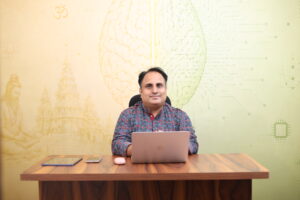
The study, titled “Personalized Yoga Mudra Prescriptions Based on Planetary Dasha: An AI-Augmented Indic Framework for Enhancing Psycho-Physiological Well-Being,” was led by Sidhharrth S Kumaar, Founder and Chief Happiness Officer of NumroVani. Conducted using a randomized controlled double-blind design, the research evaluated participants across diverse age groups, genders, and economic backgrounds over a 42-day intervention period.
According to the findings, participants receiving AI-assisted personalized yoga mudra prescriptions experienced a 60.6% improvement in Quality of Life (QoL), compared to 18.6% among participants who received generalized mudra recommendations. The personalized intervention group also demonstrated significantly stronger outcomes across multiple well-being indicators.
Key Findings
• Quality of Life improved by 60.6% in the personalized group compared to 18.6% in the control group.
• Stress levels reduced by 48% in the personalized group compared to 21% in the control group.
• Emotional stability improved by 44% versus 19%.
• Sleep quality improved by 31% versus 14%.
• Energy levels improved by 39% versus 17%.
• AI-assisted adherence reached 84%, compared to 63% in the control group.
The study further revealed that the effectiveness of the personalized framework remained consistent across gender, age, and economic strata. The strongest improvements were observed among participants aged 31–50 years, while women demonstrated marginally higher responsiveness across several outcome measures. AI-based clustering also identified distinct psycho-physiological patterns that aligned with different planetary dasha phases, offering new avenues for understanding temporal influences on wellness behaviors.
Commenting on the findings, Sidhharrth S Kumaar said:
“This research is an attempt to bridge the wisdom of the Indian Knowledge System with the possibilities of modern technology. For centuries, Indic traditions have emphasized that different individuals require different practices at different phases of life. Our findings suggest that when yoga mudras are personalized using a temporal-behavioral framework and delivered through AI-assisted systems, the outcomes can be substantially more effective than generalized approaches.”
He added:
“Rather than viewing planetary dasha as a predictive construct, this study explores its role as a temporal personalization framework that may help understand evolving psycho-emotional tendencies. Artificial Intelligence enables this wisdom to be delivered at scale through adaptive recommendations, engagement tracking, and continuous optimization. We believe this opens new possibilities for culturally rooted, data-driven preventive wellness solutions.”
The research positions planetary dasha as a temporal-behavioral mapping framework capable of informing personalized wellness interventions. AI served as an adaptive layer that processed participant profiles, generated customized mudra prescriptions, monitored adherence, and refined recommendations based on user feedback and engagement patterns.
The findings contribute to the growing global conversation around personalized healthcare, preventive wellness, and the integration of traditional knowledge systems with emerging technologies. Researchers believe the framework may have future applications across digital wellness, preventive health, behavioral self-regulation, and integrative healthcare ecosystems.
Future research is expected to incorporate physiological biomarkers such as heart rate variability, sleep tracking, wearable technologies, and longer-duration interventions to further evaluate and refine the framework. Additional studies may also explore integration with Ayurveda and other Indian Knowledge Systems to develop more comprehensive personalization models.
About the Study
The study involved 5,000 adults aged 21–60 years and employed a randomized controlled double-blind methodology. Participants were divided into control and intervention groups, with the intervention group receiving AI-augmented personalized yoga mudra prescriptions based on planetary dasha over a 42-day period. Outcomes were measured across Quality of Life, stress, emotional stability, sleep quality, energy levels, and adherence.
About NumroVani
NumroVani is a research-driven wellness and personal transformation platform founded by Sidhharrth S Kumaar. The organization works at the intersection of Indian Knowledge Systems, behavioral sciences, technology, and preventive wellness, developing frameworks that integrate ancient wisdom with contemporary research and innovation.
Frequently Asked Questions (FAQs)
- What was the objective of this study?
The study aimed to evaluate whether personalized yoga mudra prescriptions based on planetary dasha, when supported by Artificial Intelligence (AI), could improve psycho-physiological well-being more effectively than generalized yoga mudra recommendations.
- Who conducted this research?
The research was led by Sidhharrth S Kumaar, Founder and Chief Happiness Officer of NumroVani, as part of an effort to explore the intersection of Indian Knowledge Systems, Yoga, Jyotisha, and Artificial Intelligence.
- How many participants were involved in the study?
The study included 5,000 participants between the ages of 21 and 60 years, representing diverse gender, age, and economic backgrounds.
- What is meant by “personalized yoga mudras”?
Personalized yoga mudras refer to specific mudra recommendations tailored to an individual’s planetary dasha phase, psycho-emotional profile, and wellness needs, rather than providing the same mudras to everyone.
- What role did Artificial Intelligence play in the study?
AI was used to process participant information, generate personalized mudra recommendations, monitor adherence, track engagement, analyze outcomes, and refine interventions based on participant feedback.
- What were the key findings of the study?
Participants receiving AI-assisted personalized mudra recommendations reported:
• 60.6% improvement in Quality of Life
• 48% reduction in perceived stress
• 44% improvement in emotional stability
• 31% improvement in sleep quality
• 39% improvement in energy levels
• 84% adherence to the prescribed practice
- How is planetary dasha used in this framework?
In this research, planetary dasha is used as a temporal-behavioral mapping framework that may help understand changing psychological and emotional tendencies over time. It is not being used as a predictive tool but as a personalization layer for wellness interventions.
- Does this study claim to prove astrology?
No. The study does not seek to validate astrology as a predictive system. Instead, it explores whether dasha-based temporal personalization can improve the effectiveness of wellness practices when integrated with AI and Yoga.
- Why were yoga mudras chosen for the intervention?
Yoga mudras are non-invasive, easy-to-practice techniques that can be integrated into daily life. They have been traditionally associated with emotional balance, stress regulation, and overall well-being.
- Was the study scientifically designed?
Yes. The research employed a randomized controlled double-blind methodology, which is widely regarded as one of the strongest experimental designs for minimizing bias and ensuring reliable comparisons.
- Were the results consistent across different demographic groups?
Yes. Positive outcomes were observed across genders, age groups, and economic strata, suggesting broad applicability of the framework.
- Which age group benefited the most?
The strongest improvements were observed among participants between 31 and 50 years of age, particularly in Quality of Life, stress management, and sleep quality outcomes.
- Can these findings be applied to preventive healthcare?
The findings suggest potential applications in preventive wellness and self-regulation. However, further studies incorporating physiological biomarkers and longer observation periods are recommended before broader healthcare adoption.
- Can AI replace traditional wellness practitioners?
No. In this framework, AI acts as an enabling technology that improves personalization, engagement, and scalability. Human expertise, interpretation, and guidance remain essential.
- What makes this study unique?
This is among the first large-scale studies to combine:
• Yoga Mudras
• Planetary Dasha-based personalization
• Artificial Intelligence
• Large-scale quantitative analysis
within a single wellness framework.
- What are the future plans for this research?
Future research may include wearable devices, heart rate variability tracking, sleep monitoring, Ayurvedic constitution mapping, and longitudinal studies to further evaluate the framework’s effectiveness.
- Can people start practicing personalized yoga mudras today?
Yoga mudras are generally considered safe and can be practiced as a wellness activity. However, personalized recommendations should ideally be obtained from qualified practitioners familiar with the methodology used in the study.
- Where can readers learn more about the research?
Readers can connect with NumroVani or follow the work of Sidhharrth S Kumaar for future publications, research updates, and developments related to personalized wellness and Indian Knowledge Systems.