
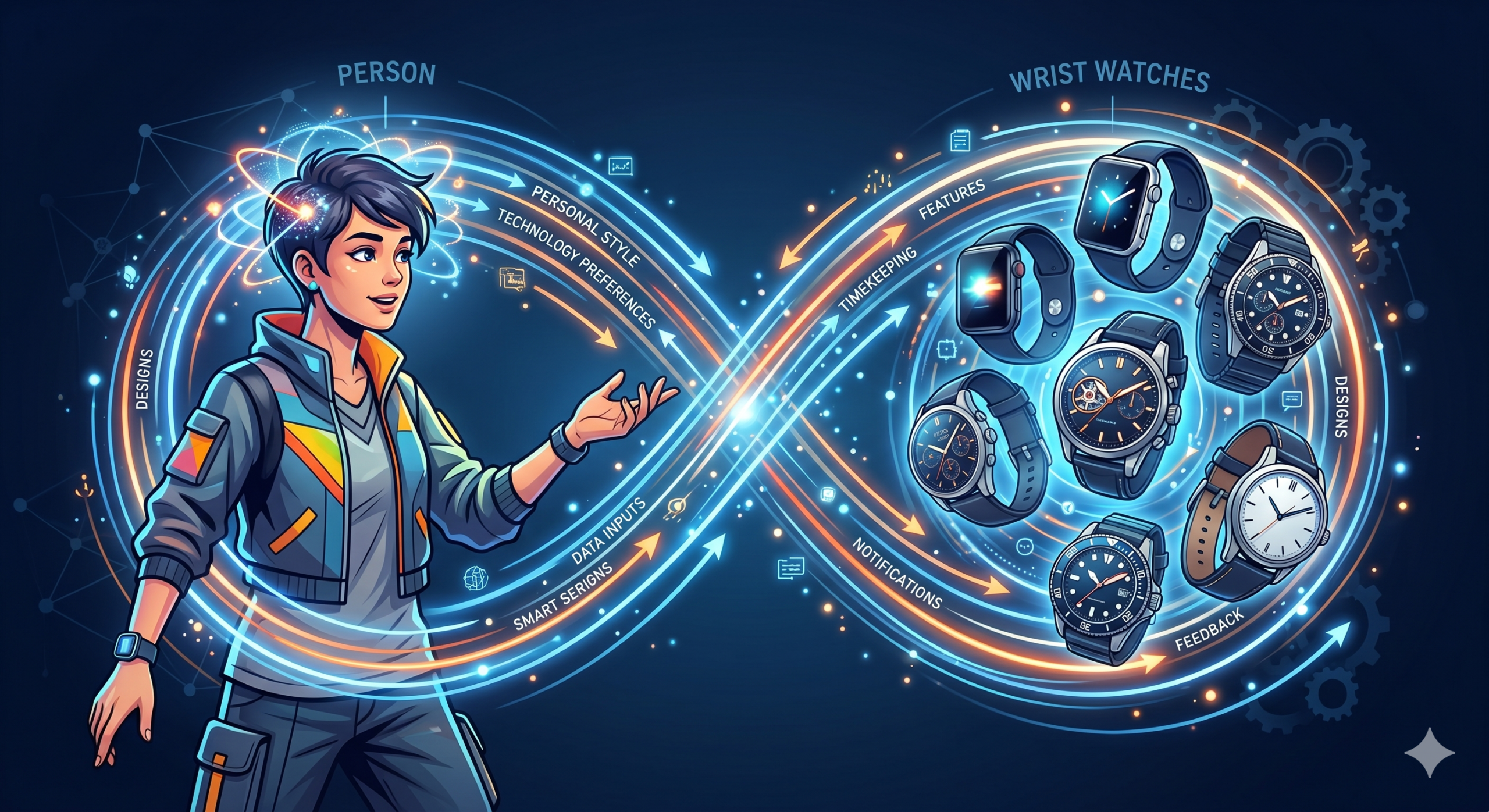
Whether you’re strapping on a vintage mechanical masterpiece or the latest high-tech sensor array, your choice of wristwear says a lot more about your brain than you might think. In the world of Wrist Watch Analysis, the divide between “analog purists” and “data-driven trackers” isn’t just about fashion it’s a window into your personality, your social etiquette, and even your risk for “digital hypochondria.”
In the context of Wrist Watch Analysis, it’s essential to recognize how different styles of watches can influence our behavior and perception of time.
As we head into 2026, research reveals that our relationship with the wrist has evolved. We have moved from simply “measuring time” to “managing ourselves,” often with unintended psychological consequences.
What is Wrist Watch Analysis?
Wrist Watch Analysis is a behavioural and astro-psychological framework developed by Sidhharrth S Kumaar that studies how wearing a watch influences decision-making, discipline, emotional response, and perception of time. It goes beyond simple timekeeping and explains how repeated interaction with a wrist-worn device creates micro behavioural patterns that shape daily actions and long-term habits. According to this framework, a wrist watch acts as a modern-day cognitive anchor, similar to a yantra, continuously guiding attention, awareness, and response timing in real life situations.
Direct evidence on wristwatch wearing
Watch-wearing as a marker of conscientiousness
Ellis, D. A., & Jenkins, R. (2015). Watch-wearing as a marker of conscientiousness. PeerJ, 3, e1210. DOI: 10.7717/peerj.1210. This is the strongest direct study because it combines two personality samples with one behavioural punctuality sample. In Study 1, 112 participants completed the Ten-Item Personality Inventory; 53 were regular watch wearers and 59 were not. Watch wearers scored higher on conscientiousness, with means of 5.35 vs 4.31, t = 3.94, d = 0.75. In Study 2, 638 online participants completed the same measure; 45.5% identified as regular watch wearers. Conscientiousness was again higher among watch wearers, 4.81 vs 4.56, t = 2.21, d = 0.18. In a logistic model controlling for age, gender, and all Big Five domains, conscientiousness still predicted watch wearing with odds ratio = 1.147, p = .028. [10]
The findings from various studies contribute valuable insights into Wrist Watch Analysis, emphasizing the psychological impact watches can have on individuals.
The third study is the key behavioural piece. Ninety participants arriving for an unrelated lab experiment had their arrival times recorded; five extreme early/late cases were removed, leaving 85 participants. Of those, 34 were watch wearers and 51 were not. Watch wearers arrived significantly earlier: 4.12 minutes early on average versus 0.90 minutes early for non-wearers, t(83) = 2.52, p = .01, d = 0.55. This matters because it shows not just self-description, but observable schedule behaviour. [11]
The paper’s limitations are substantial. The two personality studies are cross-sectional and rely on a very brief self-report instrument; the authors explicitly note the TIPI’s low coefficient alphas. Watch use was self-selected rather than randomized, so the paper cannot establish that wearing a watch causes conscientiousness or punctuality. It is equally plausible that more conscientious people adopt watches because they fit existing habits of organisation or self-presentation. The samples were also convenience-heavy and mostly drawn from the United Kingdom[12] or online networks tied to it. Even so, this is the clearest direct evidence that regular wristwatch wearing is associated with punctuality-relevant traits and behaviour. [13]
Wristwatch and the extended self
Wrist Watch Analysis: Understanding Its Role in Our Lives
Pisa, T. M. V. (2016). The Impact of the Wristwatch on the Self. Master’s dissertation, ISCTE Business School. No DOI found; institutional repository record available. This dissertation is not a peer-reviewed journal article, but it is directly on target conceptually and methodologically more useful than most consumer commentary. It used 19 semi-structured in-depth interviews with watch wearers aged 22 to 63 years, with 9 men and 10 women, and a mean interview length of 17 minutes. The thesis used qualitative coding and NVivo to examine how the wristwatch relates to the “extended self,” brand choice, status, memory, and daily use. [14]
The main findings are that the wristwatch often functions less as a pure time-reading tool and more as a symbolic object: participants described feeling “naked” without it, seeing it as part of their body or social image, and using it to convey lifestyle, taste, exclusivity, and status. The thesis also notes a shift from the watch’s functional timekeeping value toward its aesthetic and identity value in the smartphone era. This makes it very relevant to mechanisms behind analog-watch effects: the watch may shape behaviour not only by showing time, but by stabilizing a self-concept centred on order, preparedness, or prestige. [15]
Its limitations are obvious. It studies only watch wearers, uses no control group, reports no inferential statistics, and is highly interpretive. So it cannot tell us whether watches alter behaviour in general populations. What it does provide is a mechanism-level psychological account that complements Ellis and Jenkins: traditional wristwatches can become part of the user’s self-schema, which may reinforce punctuality or organised self-presentation even without active digital feedback. [15]
School-level punctuality evidence
Panganiban, L. D. (2018). Wristwatches: Difference in Punctuality Among High School Students in The Palmridge School of the School Year 2017–2018. Research report. DOI listed by ResearchGate: 10.13140/RG.2.2.16796.31364. This is a small, non-peer-reviewed school study, but it is directly on the user’s question. The study examined 79 students’ tardiness records from a population of 286, using stratified sampling, and obtained follow-up questionnaire data from 14 students. It concluded that watch-wearing affected punctuality, but that the effect did not show up only in tardiness records; it appeared more in how often students checked timekeeping devices and why they did so. [16]
This is suggestive rather than dispositive. The methods are underdeveloped by journal standards, the inferential statistical framework is unclear in the accessible record, and the setting is a single school. But the study is still psychologically interesting because it points to a plausible mediating process: wristwatch effects may work less through a dramatic reduction in formal lateness and more through time-monitoring habits and the reasons people consult time cues. That aligns with the broader theory that watches alter behaviour by increasing the salience of elapsed time and schedules. [16]
Taken together, the direct analog-watch literature supports a modest conclusion: traditional watch wearing is associated with conscientiousness, punctuality, time-checking, and symbolic self-extension, but the causal evidence is thin and the entire evidence base is small. [17]
Smartwatch and wearable studies
Sensing and measurement of emotion and movement
Quiroz, J. C., Geangu, E., & Yong, M. H. (2018). Emotion Recognition Using Smart Watch Sensor Data: Mixed-Design Study. JMIR Mental Health, 5(3), e10153. DOI: 10.2196/10153. This paper is one of the best examples of a smartwatch used to measure psychological state rather than merely track behaviour. The study included 50 young adults; 49 contributed PANAS affect data and 44 contributed usable model-building data. Participants wore a Samsung Gear 2 smartwatch and a Polar H7 chest strap while walking after emotion induction using movies or music. Measures included the Positive and Negative Affect Schedule (PANAS), heart-rate analysis, time-series features from accelerometer and gyroscope data, and supervised classifiers. [18]
The results show two important things. First, the induction worked at least partially: participants reported lower negative affect after sad stimuli under some conditions, with P < .006. Second, the sensor-based models could classify happy versus sad states with median accuracies above 78% in personal models. That does not mean the watch “reads emotions” in a broad clinical sense; it means that under constrained conditions, gait-linked sensor data can capture a behavioural signature of induced affect. From a psychology perspective, the key point is that smartwatches are not only cues. They are also measurement devices that turn movement into a proxy for emotional state. [18]
There is also a conference precursor: Quiroz, Yong, & Geangu (2017), Emotion-recognition Using Smart Watch Accelerometer Data: Preliminary Findings, UbiComp/ISWC proceedings, DOI: 10.1145/3123024.3125614. It used the same basic setup with 50 participants and demonstrates that conference proceedings in this area often serve as preliminary method papers later superseded by fuller journal versions. [19]
The limitations of this line of work are clear: young campus-heavy samples, induced emotions rather than naturalistic distress, dependence on personalized models, and uncertain external validity. Still, it is a credible demonstration that wrist-worn sensors can detect psychologically meaningful behavioural change. [18]
Feedback and prompting to change activity
Swartz, A. M., et al. (2014). Prompts to Disrupt Sitting Time and Increase Physical Activity at Work, 2011–2012. Preventing Chronic Disease, 11, 130318. DOI: 10.5888/pcd11.130318. Sixty office workers were randomized to a Stand group (n = 29) or a Step group (n = 31). Both groups received hourly computer-based and wrist-worn prompts; the Step group was additionally told to walk at least 100 steps. Behaviour was measured with the activPAL over the same three consecutive workdays at baseline and intervention. Both groups reduced average sitting-bout duration and bouts lasting 60 minutes or more. The Stand group reduced total sitting time by 6.6%, longest sitting bout by 29%, and increased sit-to-stand transitions by 15% and standing time by 23%. The Step group increased workday steps by 35%. Between-group differences were not significant. [20]
This is important because it distinguishes two kinds of active intervention: prompt to interrupt versus prompt to act. Mere interruption reduced sitting; adding a concrete walking prescription increased steps, but not necessarily more sitting reduction. That pattern foreshadows later smartwatch studies: the precise wording and action architecture of a prompt matters. Its main limitations are the short duration, the absence of a no-prompt control, and the fact that the intervention combined wrist and desktop prompting. [21]
Jauho, A.-M., et al. (2015). Effect of wrist-worn activity monitor feedback on physical activity behavior: A randomized controlled trial in Finnish young men. Preventive Medicine Reports, 2, 628–634. DOI: 10.1016/j.pmedr.2015.07.005. This is one of the strongest wearable feedback studies. A population-based sample of 276 conscription-aged young men (mean age 17.9) was randomized to intervention (137) or control (139). Both groups wore identical monitors; only the intervention group saw daily feedback. The primary outcomes were objectively measured moderate-to-vigorous physical activity (MVPA) and sedentary activity, analysed with generalized estimating equations. Valid weekly PA data were available for 72 intervention and 90 control participants. [22]
The intervention group increased MVPA relative to control (GEE p = 0.012) and decreased sedentary activity (GEE p = 0.032). In the first week, intervention participants showed 12 more minutes of MVPA than controls (p = 0.034). During the first seven weeks, they spent about one hour less sedentary than controls on average (p < .05). Questionnaire data also suggested a reduction in the proportion of the most sedentary men from 28% to 10% in the intervention group (p = 0.029), with no corresponding change in control. The main limitations are substantial missing data, restriction to young men, short-term follow-up, and an author employed by Polar Electro. Still, it is high-value causal evidence that visible wrist-worn feedback can change behaviour, at least in the short run. [22]
Sloan, R. A., et al. (2018). The influence of a consumer-wearable activity tracker on sedentary time and prolonged sedentary bouts: secondary analysis of a randomized controlled trial. BMC Research Notes, 11, 189. DOI: 10.1186/s13104-018-3306-9. This paper is crucial because it is a large negative result. It analysed a four-arm RCT with 800 employees from 13 organizations, comparing control, Fitbit, and two Fitbit-plus-incentive groups over 12 months. Objective sedentary time and prolonged sedentary bouts were measured by ActiGraph accelerometers. Changes in sedentary time and prolonged sedentary bouts were not statistically significant and not different between groups. However, increases in steps were associated with reductions in sedentary time and prolonged sedentary bouts irrespective of group exposure. The authors explicitly caution against treating consumer trackers as a panacea for sedentary behaviour. [23]
That finding adds an important nuance: wearables can fail, especially when the device is expected to change sitting behaviour on its own. The tracker may support change when an already-motivated user increases steps, but the device itself may not be sufficient to shift prolonged sitting patterns. [24]
Franssen, W. M. A., et al. (2022). A 12-week consumer wearable activity tracker-based intervention reduces sedentary behaviour and improves cardiometabolic health in free-living sedentary adults: a randomised controlled trial. Journal of Activity, Sedentary and Sleep Behaviors, 1, 8. DOI: 10.1186/s44167-022-00007-z. This three-arm RCT helps explain the mixed tracker results. Fifty-nine sedentary adults aged 41 to 71 were randomized to control (20), tracker only (20), or tracker plus additional motivational support (19). The intervention used a Polar M200 and objective measurement with activPAL3, plus anthropometry, lipids, and insulin sensitivity. The tracker-only group showed no significant improvements, but the multicomponent tracker-plus group reduced sedentary behaviour by 81 min/day, increased step count by roughly 3,100/day, increased standing, light activity, and MVPA, and improved several cardiometabolic markers. [25]
This is one of the clearest demonstrations that active support layered on top of a wearable outperforms self-monitoring alone. The limitation is that the intervention is bundled, so the tracker effect cannot be cleanly separated from motivational interviewing or additional messaging. But from a behavioural-design perspective, that may be the real lesson: the strongest wearable effects come from systems, not devices alone. [26]
Feasibility, adherence, and just-in-time interventions
Lawrie, S., et al. (2018). Evaluation of a smartwatch-based intervention providing feedback of daily activity within a research-naive stroke ward: a pilot randomised controlled trial. Pilot and Feasibility Studies, 4, 157. DOI: 10.1186/s40814-018-0345-x. This study combined an observation phase with a pilot RCT in a stroke rehabilitation ward. Across both phases, 50 patients contributed smartwatch data (20 observation, 30 pilot RCT). Out of 470 ward admissions, only 11% were recruited across 30 weeks. The feedback intervention delivered repeated activity feedback across a 9-hour day. Adherence to wearing the watch reached 74% in the feedback group and 86% in the no-feedback group; overall RCT adherence was reported as 80%. Baseline activity was exceeded on 65% of days in the feedback group versus 55% in the no-feedback group, but the authors did not conduct inferential statistics because the dataset was incomplete and underpowered. [27]
The value of this study lies less in efficacy and more in implementation psychology. It shows that smartwatches can be acceptable and logistically feasible even in a disrupted clinical environment, but that protocol clarity, staff support, device explanation, and communication are decisive. The authors explicitly discuss a possible Hawthorne effect and note that patients may behave differently simply because they know the watch is monitoring them. That is not a trivial nuisance; it is one of the mechanisms by which wearables may work. [28]
Stone, C., et al. (2024). Presenting and Evaluating a Smartwatch-Based Intervention for Smoking Relapse (StopWatch): Feasibility and Acceptability Study. JMIR Formative Research, 8, e56999. DOI: 10.2196/56999. This is a good example of a true just-in-time adaptive intervention. The system used smartwatch motion sensors to detect cigarette-like hand movements and then delivered supportive messages on the watch. The published abstract reports 18 smokers who tested the intervention over 2 weeks. The main outcomes were acceptability and adherence, assessed with a 27-item Qualtrics questionnaire and free-text thematic analysis. Most participants found the intervention feasible and acceptable: 12/18 (66%) judged it acceptable, 12/18 (66%) judged messages timely, and 11/18 (61%) found them relevant. But 16/18 (89%) also reported times when the battery ran out, and some participants found the watch bulky or intrusive. [29]
This study matters because it shows the edge of what smartwatches uniquely add: passive detection plus intervention at the moment of risk. Yet it also exposes the central engineering-psychology tradeoff of wearables: the more continuous and “smart” the system becomes, the more it depends on comfort, battery, tolerable notifications, and high daily adherence. [30]
Long-term use and smartwatch psychology
Peng, W., et al. (2021). Habit Formation in Wearable Activity Tracker Use Among Older Adults: Qualitative Study. JMIR mHealth and uHealth, 9(1), e22488. DOI: 10.2196/22488. This study interviewed 20 adults aged 65+ who had used trackers for more than six months. It identified eight themes relevant to habit formation: meaningful initiation, small behavioural goals, consistent time and place cues, action planning, coping planning, and a positive strategy for lapses. A particularly relevant insight is that long-term users anchored tracker-wearing to morning routines, night charging routines, and stable locations, making device use more like wearing a conventional watch and less like a one-off health gadget. The study is limited by survivorship bias and a largely White, relatively young-old sample, but it explains why some wearables become habitual and others are abandoned. [31]
Liu, R., Yang, J., & Yao, J. (2022). How smartwatch use drives user reciprocity: The mediating effects of self-expansion and self-extension. Frontiers in Psychology, 13, 1041527. DOI: 10.3389/fpsyg.2022.1041527. This paper is not a health-behaviour trial, but it is valuable for the psychology of smartwatch use. The authors surveyed 343 valid smartwatch users in China and used structural equation modelling with bootstrapping. Smartwatch use positively predicted self-expansion and self-extension, and these in turn predicted user loyalty and user influence. For example, the regression coefficients of smartwatch use on self-expansion and self-extension were 1.036 and 1.259, both p < .001. The important conceptual point is that smartwatches can become not just tools, but extensions of identity and capability, much as traditional watches can. The difference is that the smartwatch’s self-extension is tied to interaction and data use, not just symbolism. The study is cross-sectional and self-report, so it is not causal. [32]
Across these wearable studies, one pattern is especially robust: the behavioural effect increases as the device shifts from passive logging toward actionable feedback, but so do burden, attrition, and the risk of reactivity. [33]
What Does this Mean
In simple terms, all this research is saying one very practical thing: wearing a wristwatch is not just about checking time, it subtly shapes how you behave every day. People who wear watches tend to be more aware of time, more organised, and slightly more proactive in their actions, like reaching places earlier or planning better. Over time, the habit of repeatedly looking at the watch creates a natural discipline. It also becomes part of your identity, you start seeing yourself as someone who values time, structure, and preparedness, and that belief reflects in your actions.
When it comes to smartwatches, the effect becomes even stronger because now the device is not just showing time, it is guiding your behaviour. It reminds you to move, tracks your activity, and even gives feedback on what you are doing. This creates a loop where you become more conscious of your actions and gradually start improving them. Whether it is walking more, sitting less, or being more active, the watch acts like a constant nudge. Over time, these small nudges turn into habits, and habits shape lifestyle.
As Sidhharrth S Kumaar rightly puts it, “A wristwatch does not just tell you time, it trains how you respond to time.” What you wear on your wrist quietly influences how you think, act, and structure your day. It is not magic, but it is also not neutral. It is a small tool that keeps reminding you, again and again, to align your actions with time, and that repetition is what slowly changes behaviour.
Conclusion: Why Wrist Watches Influence Behaviour More Than You Think
This relationship highlights why Wrist Watch Analysis is important for understanding user behavior in different contexts.
A wrist watch is not just an accessory. It is a behavioural tool.
Traditional watches build discipline, punctuality, and structure. Smartwatches amplify behaviour through feedback, but also introduce risks like anxiety, distraction, and dependency.
The real impact lies in how the device is used. Because the wrist is not passive. It is one of the most active behavioural touchpoints in your daily life.
Wrist Watch Analysis: Frequently Asked Questions on Behaviour, Astrology and Psychology
Does wearing a watch change behaviour?
Yes. Wearing a watch creates constant time awareness, which leads to micro-pauses before actions. These pauses improve decision-making, discipline, and response control over time.
Which hand should you wear a watch according to astrology?
In astrology, the left hand is linked with Ida Nadi (calm, receptive energy), while the right hand is linked with Pingala Nadi (active, decision-oriented energy). Wearing a watch on either hand can subtly influence behaviour and energy patterns.
Is smartwatch better than analog watch for behaviour improvement?
Smartwatches increase awareness through notifications and tracking, but can also create distraction. Analog watches promote steady awareness without interruption, making them better for discipline and focus.
Can a wrist watch act as a talisman or yantra?
Yes, in a functional sense. A wrist watch repeatedly draws attention to time, acting as a behavioural anchor. This aligns with the concept of a yantra, which works by bringing the mind back to a specific focus again and again.
Is a wrist watch a behaviour conditioning tool?
Yes. A wrist watch acts as a constant behavioural conditioning tool by reinforcing time awareness throughout the day. Each glance at the watch creates a micro-feedback loop that influences how a person plans, reacts, and prioritizes tasks. Over time, this repeated interaction shapes discipline, punctuality, and structured thinking.
How does a wrist watch work as a modern yantra or talisman?
A traditional yantra or talisman works by repeatedly bringing attention to a specific symbol or intention. A wrist watch performs a similar function in a modern context by anchoring awareness to time. This repeated engagement creates mental alignment, focus, and behavioural stability, making it a practical, everyday equivalent of a yantra.
Why do successful people prefer wearing watches?
Wearing a watch reinforces time sensitivity, punctuality, and structured thinking. These traits are strongly linked with professional success and consistent performance.
Does wearing a watch reduce anxiety or increase it?
It depends on usage. Constant checking can increase anxiety, but structured use improves control over time and reduces uncertainty, leading to better mental clarity.
What is the psychological impact of wearing a watch daily?
Daily watch usage builds habit loops around time awareness, improving planning ability, reducing impulsive actions, and strengthening routine-based behaviour.
References
Baron, K. G., Abbott, S., Jauch, N., & Duffecy, J. (2017). Orthosomnia: Are smartwatches helping or hindering sleep? Journal of Clinical Sleep Medicine.
Ellis, D. A., & Jenkins, R. (2015). Watch-wearing as a marker of conscientiousness. PeerJ, 3, e1210.
Fournier, H., et al. (2026). Attention hijacked: How social media notifications disrupt cognitive processing. Computers in Human Behavior.
Guldbrandsen, B. V., et al. (2025). Development of a scale for measuring orthosomnia: The Bergen Orthosomnia Scale (BOS). Frontiers in Sleep.
Rosman, L., et al. (2024). Impact of wearables on health care use and psychological well-being in patients with atrial fibrillation. Journal of the American Heart Association.
Sveinsson, S. J. (2020). The Quantified Self: The affects on health behavior from self-tracking.
Yuceel, A. I., et al. (2025). The influence of past experience with wristbands and use exposure on perceived usability of wearable wrist-worn sensors. Illinois Experts.