We spend enormous amounts of time and money trying to understand skin from the outside.
Creams. Serums. Medicines. Procedures. Diets. Supplements.
But what if part of the conversation about skin needs to begin somewhere we cannot see?
Inside the brain.
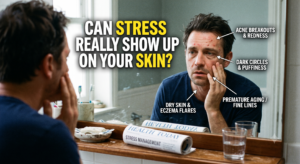
Think about something most of us have experienced. You have an important meeting tomorrow and suddenly notice a breakout. You go through an intensely stressful period and an old skin problem appears to flare again. Someone becomes anxious and starts scratching more. Another person develops a visible skin condition, becomes increasingly self-conscious about it, experiences more stress—and slowly enters a loop.
For years, we have casually said:
“It must be stress.”
But that statement is far too simplistic.
The more interesting question is:
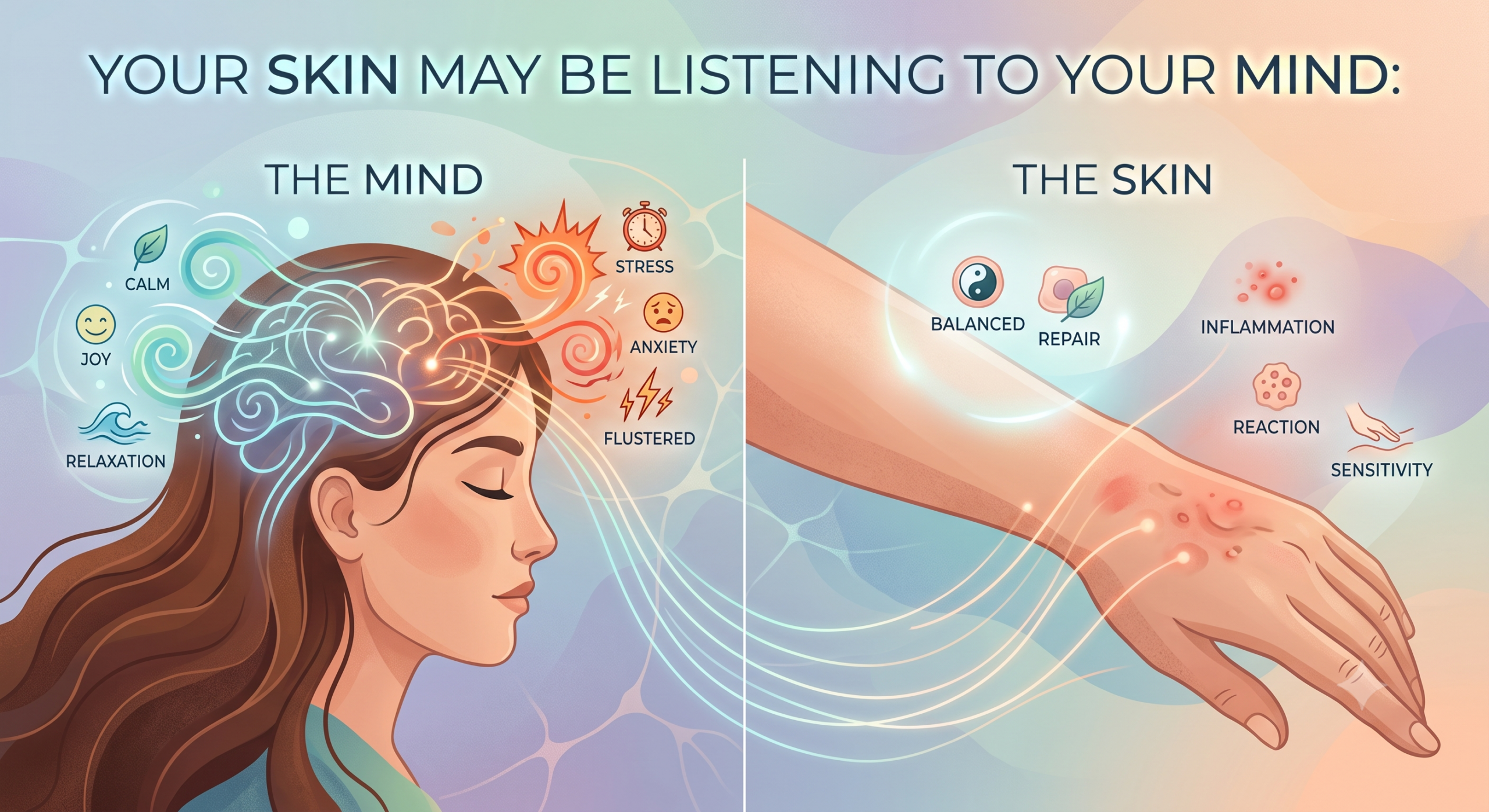
What exactly happens between experiencing stress in the mind and seeing—or feeling—something change in the skin?
That question takes us into the fascinating world of psychodermatology and the Brain–Skin Axis.
And I believe this emerging conversation deserves the attention not only of dermatologists and mental-health professionals, but also of serious meditation, mindfulness and mind–body practitioners.
Not because meditation should replace dermatology.
But because the human body does not operate in isolated departments.
What Is Psychodermatology?
Psychodermatology explores the relationship between psychological processes and dermatological health.
At its core, the relationship is bidirectional.
Our psychological state can interact with what happens in the skin, while what happens to our skin can profoundly affect our psychological state.
Stress, anxiety, emotional burden, sleep disruption and behavioural responses can potentially interact with neural, endocrine and immune pathways.
At the same time, living with acne, eczema, psoriasis, vitiligo, itching, hair loss or another visible or chronic skin condition can influence self-esteem, mood, social behaviour and overall quality of life.
This is where the old distinction between “mental” and “physical” begins to break down.
The body does not experience emotion in one room and physiology in another.
Everything communicates.
Meet the Brain–Skin Axis
When we experience psychological stress, the experience does not remain confined to our thoughts.
The body responds.
One important component of this response involves the hypothalamic–pituitary–adrenal axis, commonly called the HPA axis.
Psychological stress can activate a cascade involving the hypothalamus, pituitary gland and adrenal glands, leading to the release of cortisol and other stress mediators.
The autonomic nervous system also participates.
Immune signalling participates.
Sensory nerves participate.
And increasingly, research suggests that the skin itself should not be seen as a passive recipient of instructions from the brain.
The skin contains keratinocytes, immune cells, mast cells, nerve endings and receptors capable of participating in neuroendocrine and immune communication.
So instead of thinking:
Brain → Skin
we should increasingly think:
Brain ↔ Skin
That bidirectional conversation is the Brain–Skin Axis.
Stress Does Not Mean “It Is All in Your Head”
This distinction is extremely important.
Stress does not simply “cause” every skin problem.
Dermatological conditions can involve genetics, immunity, hormones, infections, environmental exposures, barrier dysfunction and many other biological factors.
Psychodermatology does not replace dermatology.
It broadens the lens.
The more useful model is:
Psychological Stress → Brain Appraisal → Neuroendocrine and Autonomic Response → Immune and Cutaneous Interaction → Skin Experience
And then the process can travel backwards:
Skin Symptoms → Appearance Concerns / Itching / Discomfort → Emotional Distress → Increased Stress → Behavioural and Physiological Response
This creates a feedback loop.
That loop is where the conversation becomes extremely relevant to meditation, mindfulness and other mind–body practices.
Where Does Meditation Enter the Conversation?
Meditation has traditionally been discussed around relaxation, mental peace, concentration, spirituality and stress reduction.
All of these remain important.
But our understanding of meditation should evolve alongside our understanding of physiology.
If stress can influence neuroendocrine, autonomic and immune activity, then it becomes reasonable to ask whether interventions that support stress regulation and emotional regulation may have an adjunctive role within the broader Brain–Skin conversation.
The wording here matters.
The question is not:
“Can meditation cure a skin disease?”
That would be a clinical claim requiring condition-specific evidence.
The better question is:
“Can meditation support regulation of the psychological and stress-related dimensions that interact with the Brain–Skin Axis?”
That is a much more responsible and scientifically interesting question.
Meditation Professionals Need to Understand More Than Meditation
I believe meditation education now needs to mature.
The meditation professional of the future should not only know how to conduct a meditation.
They should increasingly understand why a practice is being selected, what physiological system it is intended to influence, what evidence supports it, what remains hypothetical, and where the practitioner’s professional boundaries begin and end.
A meditation coach working with chronic stress should understand the basics of the autonomic nervous system.
Someone teaching breath regulation should understand physiological arousal.
Someone working with sleep should understand the relationship between sleep, stress and health.
And if practitioners intend to work with people experiencing distress associated with chronic or visible skin conditions, I believe foundational understanding of psychodermatology and the Brain–Skin Axis can become highly valuable.
This does not turn them into dermatologists.
It makes them better-informed practitioners.
But There Is Another Problem: One Meditation Does Not Fit Everyone
Once we accept that meditation and mind–body practices may have a supportive role in stress regulation, another problem becomes obvious.
Why do we give everyone the same meditation?
Two people can experience the same stressful event very differently.
One becomes restless.
Another withdraws.
One overthinks.
Another becomes emotionally overwhelmed.
One finds silence deeply calming.
Another becomes uncomfortable sitting alone with their thoughts.
One responds beautifully to music.
Another prefers breath awareness.
One finds aroma soothing.
Another finds it distracting.
This is where I believe the next frontier lies:
Personalized Mind–Body Regulation.
And this brings us to a more unconventional question.
Can Astrology and Numerology Become Personalization Layers?
Astrology and Numerology are usually discussed in the language of prediction.
I believe that limits the research conversation around them.
Instead of only asking:
“What will happen to this person?”
I am increasingly interested in asking:
“What kind of person are we designing an intervention for?”
That changes the role of Astrology and Numerology.
In the framework I use, Astrology and Numerology are not treatments.
They do not diagnose acne, psoriasis, eczema, vitiligo or any other dermatological condition.
They should not replace medical or psychological assessment.
Instead, I use them as archetype-identification and personalization layers—to generate a more individualized hypothesis about what kind of mind–body intervention may suit a person better.
The model becomes:
Astrology + Numerology → Archetypal Profile → Personalization Hypothesis → Selection of Mind–Body Intervention → Measured Response
The final step is critical.
The person’s actual response must always matter more than the prediction.
From Prediction to Archetype
Consider two individuals with similar levels of stress.
The conventional approach might recommend the same ten-minute mindfulness recording to both.
A personalized approach asks deeper questions.
Does the person need grounding or activation?
Do they engage better through sound, silence or visualization?
Are they responsive to rhythm?
Do they prefer structure or freedom?
Are they sensory-seeking or sensory-sensitive?
Does repetition calm them or irritate them?
How do they respond to guided instruction?
Psychology already studies individual differences through constructs such as personality, temperament and behavioural style.
My proposition is that Astrology and Numerology can be explored as additional archetypal classification layers within this personalization process.
And this is not purely theoretical for me.
I Have Already Begun Testing This in Client Work
Over time, I have been testing this personalization hypothesis within my own client experiences.
I have used Astrology and Numerology as archetypal inputs to help personalize meditation, sound-based practices, aroma environments, light settings and broader mind–body routines.
The early results have been promising.
Different people seem to engage very differently when the intervention is personalized rather than standardized.
Some clients respond better to guided meditation.
Some prefer silence.
Some engage more deeply with visualization.
Some respond more strongly to sound.
Others appear to benefit more from aroma, breath regulation or a carefully designed sensory environment.
What has interested me most is not simply whether somebody feels relaxed.
It is the pattern of differential response.
Two people with similar stress levels can respond very differently to the same intervention.
In my experience, introducing an archetypal personalization layer has often helped improve the initial fit between the person and the intervention being suggested.
These observations are still practice-based and preliminary.
They are not clinical proof.
They do not establish Astrology or Numerology as medical diagnostic tools.
But they are encouraging enough to justify a much more important next step:
systematic research.
The question, therefore, is no longer only:
“Could Astrology and Numerology work as personalization layers?”
My client experience suggests that they may have practical value in generating individualized intervention hypotheses.
The stronger research question now becomes:
Can these early practice-based observations be reproduced, measured and validated under controlled conditions?
That is the transition I am interested in—from practitioner observation to structured evidence.
The SSK Brain–Skin Personalization Model
Based on these observations, I have been developing what I call the SSK Brain–Skin Personalization Model.
It works across three layers.
Layer 1: Understand the Regulation Loop
Psychological Trigger
↓
Brain Appraisal
↓
Autonomic + Neuroendocrine Response
↓
Neuroimmune / Cutaneous Interaction
↓
Skin Experience
↓
Psychological Feedback
This is the psychodermatology layer.
It helps us understand where the mind–skin interaction may be occurring.
Layer 2: Understand the Individual
The second layer introduces personalization.
Psychological Profile + Lifestyle + Stress Pattern + Sensory Preference + Astrology + Numerology
↓
Individual Regulation Archetype
Astrology and Numerology are placed here deliberately.
They are not the biological mechanism.
They are additional archetypal inputs used to generate a personalization hypothesis.
Layer 3: Personalize the Regulation Experience
Once the individual profile and stress pattern are understood, the intervention itself can become multimodal.
I see four especially interesting pathways.
Personalized Meditation
Meditation does not need to be standardized for everyone.
Personalization may include guided versus silent meditation, breath awareness versus visualization, movement-based versus seated practice, short versus long duration, morning versus evening practice, structured versus intuitive meditation, and high versus low sensory stimulation.
The objective is to find the regulatory experience the person is most likely to engage with consistently.
Personalized Sound Therapy
Sound is another underexplored personalization layer.
Instead of giving everybody the same “healing music,” intervention design can consider rhythm, tempo, repetition, instrumentation, natural soundscapes, mantra, chanting, minimalist sound and individual music preference.
The useful question is not which sound is universally healing.
The question is:
Which auditory environment helps this individual regulate most effectively?
Personalized Light and Visual Environment
Light and visual environments can influence alertness, circadian rhythms, mood and behaviour.
A personalization model may explore timing, brightness, environmental stimulation and visual preference.
Clinical phototherapy belongs firmly within medical practice.
But the wider visual environment surrounding meditation and relaxation can still be personalized.
Does a person respond better to dim environments or brighter settings?
Natural daylight or low-stimulation evening light?
Minimalist surroundings or visual imagery?
The environment itself can become part of the intervention.
Personalized Aroma
Smell has a powerful relationship with memory, emotion and subjective experience.
Yet aroma recommendations are often standardized.
Lavender for everyone.
Sandalwood for everyone.
Frankincense for everyone.
But human olfactory response is highly individual.
A personalized model can examine preference, emotional association, intensity, timing, context, past experiences and, experimentally, archetypal hypotheses generated through Astrology and Numerology.
Again, aroma should not be framed as treating dermatological disease.
Its role is better explored through relaxation, emotional regulation, sensory environment and subjective well-being.
The Personalization Engine
Put these layers together and a larger architecture emerges:
Brain–Skin Axis
↓
Stress + Behavioural Profile
↓
Astrology + Numerology Archetype
↓
Personalization Engine
↓
Meditation | Sound | Light | Aroma
↓
Stress and Emotional Regulation
↓
Measure the Individual Response
↓
Refine the Intervention
This final step changes everything.
The model should never become:
“Astrology says X, therefore prescribe Y.”
Instead:
“The archetype suggests Y may suit this individual → Y is tested → the response is measured → the intervention is retained, modified or rejected.”
Astrology and Numerology help generate the hypothesis.
The client’s response tests it.
That transforms a deterministic model into an adaptive personalization framework.
From Client Experience to Research
Many meaningful research questions begin with observation.
A practitioner notices a recurring pattern.
A hypothesis develops.
The pattern is documented.
Then it is tested systematically.
That is how I view the current stage of this work.
I am not presenting Astrology- or Numerology-led personalization as an established clinical standard.
I am saying something more specific:
I have begun applying this model in real-world client settings, the early observations are promising, and they now deserve formal investigation.
The journey I see ahead is:
Practice Observation → Structured Documentation → Controlled Testing → Evidence-Based Personalization
That progression is important.
Because the strongest future for traditional knowledge systems will not come from making increasingly larger claims.
It will come from converting repeated practitioner observations into testable models.
From Ancient Archetypes to Precision Wellness
Healthcare is already moving toward personalization.
Modern medicine increasingly understands that people can respond differently to the same intervention because of genetics, environment, lifestyle, behaviour and numerous other variables.
Wellness should evolve too.
But my vision goes one step further.
I believe we should investigate whether traditional knowledge systems can contribute new variables worth testing.
Astrology and Numerology have historically attempted to classify temperament, behavioural tendencies and human archetypes.
Modern science does not currently establish astrological or numerological archetypes as validated clinical biomarkers.
That should be stated clearly.
But lack of validation does not mean the research question should never be asked.
The better approach is:
Traditional systems propose classifications. Practice generates observations. Modern experiments determine whether those classifications add predictive value.
That is the bridge worth building.
Imagine the Personalization Engine of the Future
Imagine opening a wellness platform a few years from now.
It does not simply ask:
“Would you like to meditate?”
It understands your recent sleep.
Your stress.
Your mood.
Your behaviour.
Your sensory preferences.
Your wearable-derived physiological signals.
And, within an experimental complementary layer, your astrological and numerological archetype.
The system may then recommend a twelve-minute guided meditation, a specific sound environment, a low-stimulation visual setting, an aroma profile based on individual preference and tolerance, and a time of day aligned with behaviour and circadian rhythm.
The response is then measured.
Did perceived stress decrease?
Did sleep improve?
Did adherence improve?
Did physiological arousal change?
If the person is undergoing dermatological care, did patient-reported outcomes change over time?
The system learns.
The recommendation evolves.
At that point, we are no longer discussing generic meditation.
We are discussing a potential precision mind–body personalization engine.
Where Artificial Intelligence Changes Everything
This is where Artificial Intelligence becomes especially powerful.
Astrology and Numerology can generate large numbers of archetypal combinations.
Psychological profiling adds another layer.
Lifestyle adds another.
Sleep adds another.
Wearable data adds another.
Previous response to meditation, sound, light and aroma adds more.
For a practitioner, integrating all these variables simultaneously becomes complex.
For a computational system, they become features that can be tested.
A future architecture could look like this:
Traditional Archetypal Data
Astrology + Numerology
Behavioural Data
Stress + Sleep + Lifestyle + Sensory Preference
Physiological Data
Wearables + Relevant Biomarkers
AI Personalization Engine
↓
Individualized Mind–Body Intervention
↓
Continuous Outcome Measurement
↓
Adaptive Personalization
The crucial scientific principle is this:
AI should not assume the traditional variables work.
It should test whether they add value.
If Astrology contributes nothing beyond conventional psychological assessment, the data should demonstrate that.
If some astrological or numerological variables consistently improve prediction of adherence, preference or response after controlling for conventional variables, that would justify deeper investigation.
That is how traditional knowledge can enter serious interdisciplinary research.
Why Psychodermatology Could Be an Ideal Testing Ground
This is one reason I find psychodermatology so interesting.
Skin offers something many mind–body fields struggle to obtain:
observable outcomes.
Alongside subjective stress, anxiety, sleep and quality-of-life measures, researchers can potentially examine symptom diaries, itch intensity, flare frequency, skin-barrier measurements, condition-specific scoring systems, adherence and patient-reported outcomes.
This creates the possibility of controlled comparisons.
For example:
Standard Dermatological Care
versus
Standard Care + Generic Meditation
versus
Standard Care + Conventionally Personalized Meditation
versus
Standard Care + Archetype-Informed Personalized Meditation
Now the discussion is no longer philosophical.
It becomes empirical.
Does personalization improve adherence?
Does it improve stress reduction?
Does it improve quality of life?
Does it improve patient-reported outcomes?
And most provocatively:
Does adding Astrology or Numerology to conventional personalization provide any incremental predictive value?
That is a research question science can answer.
The Future Is Not Astrology Versus Science
For too long, discussions around traditional knowledge systems have been trapped between two extremes.
One side asks us to believe everything.
The other side asks us to investigate nothing.
Neither approach is particularly useful.
My preferred approach is:
Preserve the hypothesis. Test the mechanism. Measure the outcome. Reject what fails. Refine what survives.
Astrology and Numerology should not receive exemption from scientific scrutiny.
They should receive the opportunity to face it.
And perhaps that is where their most interesting future lies.
Not simply in predicting events.
But in generating hypotheses around human individuality, behavioural archetypes and personalization that can be tested using contemporary research methods.
From Psychodermatology to Precision Mind–Body Wellness
Psychodermatology begins with a deceptively simple observation:
The mind and skin communicate.
The Brain–Skin Axis helps us understand how.
Meditation gives us a potential pathway for supporting stress and emotional regulation.
Sound, light and aroma add sensory pathways through which a regulatory experience can be designed.
Astrology and Numerology add an archetypal personalization layer that I have already begun applying in client work, with early promising observations that now deserve structured scientific study.
Artificial Intelligence offers the computational capability to integrate all these variables, learn from outcomes and continuously improve personalization.
Put together, the larger vision becomes:
Psychodermatology → Brain–Skin Axis → Individual Archetype → Personalized Regulation → Meditation + Sound + Light + Aroma → Measured Outcomes → AI-Led Adaptation
I believe this could become an important frontier for the next generation of meditation and mind–body research.
Not because every hypothesis will prove correct.
Some almost certainly will not.
But because the future of traditional knowledge should not depend only on belief.
It should also depend on our willingness to investigate it.
The future of meditation may not be another meditation.
It may be knowing which meditation, which sound, which sensory environment and which regulatory experience is appropriate for which individual—and learning why.
And perhaps the skin, where our internal and external worlds literally meet, will become one of the most fascinating places to test that future.
Frequently Asked Questions
1. What is psychodermatology?
Psychodermatology is an interdisciplinary field exploring the relationship between psychological processes and skin health. It examines both directions of this relationship: how stress and psychological factors may interact with certain dermatological conditions, and how living with visible or chronic skin problems can affect psychological well-being.
2. What is the Brain–Skin Axis?
The Brain–Skin Axis describes bidirectional communication between the brain, nervous system, neuroendocrine pathways, immune system and skin. Psychological stress can activate biological responses involving systems such as the HPA axis and autonomic nervous system, while signals originating in the skin may also contribute to psychological and neurological responses.
3. Can stress affect your skin?
Stress can interact with skin physiology through neuroendocrine, immune and behavioural pathways and may aggravate symptoms in some stress-sensitive dermatological conditions. However, skin diseases are multifactorial, and stress should not be assumed to be the sole cause of a dermatological condition.
4. Can meditation improve skin conditions?
Research has investigated mindfulness, meditation and other psychological interventions as adjunctive approaches in several dermatological conditions, particularly psoriasis and atopic dermatitis. Some findings are encouraging, especially for psychological distress and quality of life, but meditation should not be considered a replacement for appropriate dermatological treatment.
5. What is personalized meditation?
Personalized meditation moves beyond giving everybody the same meditation technique. The practice may be adapted according to factors such as stress response, behavioural tendencies, sensory preference, lifestyle, sleep patterns, previous response and other individual characteristics.
6. What is the SSK Brain–Skin Personalization Model?
The SSK Brain–Skin Personalization Model is a practice-informed conceptual framework developed by Sidhharrth S Kumaar. It combines understanding of the Brain–Skin Axis with individual behavioural and sensory characteristics and an experimental archetypal layer derived from Astrology and Numerology to generate personalized hypotheses for meditation and related mind–body practices.
The model is not presented as a medical diagnostic system or validated clinical treatment protocol. Early client observations have been promising, and the framework is intended to generate hypotheses that can subsequently be investigated through structured research.
7. How are Astrology and Numerology used in personalized meditation?
In Sidhharrth S Kumaar’s proposed framework, Astrology and Numerology are used as archetype-identification and personalization inputs rather than medical diagnostic tools. The archetypal profile helps generate a hypothesis about the meditation or sensory environment that may suit an individual, after which the person’s actual response is observed.
The proposed principle is:
Archetypal Assessment → Personalization Hypothesis → Intervention → Response Measurement → Refinement
Formal controlled research is required to establish whether these archetypal variables provide predictive value beyond conventional psychological, behavioural and lifestyle assessments.
8. Can sound, aroma and light also be personalized?
Potentially, yes. Research supports investigating music and sound, olfactory interventions and appropriately designed light exposure in areas such as stress, anxiety, sleep and emotional well-being, although evidence varies considerably by intervention and outcome.
A personalized approach may consider individual preference, context, timing, sensory sensitivity and previous response rather than assuming one sound, aroma or visual environment works equally well for everyone.
9. Can Astrology or Numerology diagnose a skin disease?
No. Astrology and Numerology should not replace dermatological diagnosis, medical testing or evidence-based treatment. In the proposed personalization framework, they are explored as complementary archetypal variables for generating hypotheses about individual differences and intervention preferences.
10. What is Precision Mind–Body Wellness?
Precision Mind–Body Wellness is an emerging conceptual approach in which meditation and supportive sensory interventions are personalized according to the individual rather than standardized for everyone.
Sidhharrth S Kumaar proposes exploring a future model integrating behavioural assessment, stress patterns, lifestyle, sensory preferences, physiological and wearable data, Astrology and Numerology-derived archetypes, and eventually Artificial Intelligence to continually test and refine individualized interventions.
Scientific references
These 12 would give the article a solid scientific backbone. Importantly, they support Brain–Skin biology, psychological/mindfulness interventions, stress regulation, sound, aroma and light—not the claim that astrology/numerology personalization has already been scientifically validated.
- Rafidi B, Kondapi K, Beestrum M, Basra S, Lio P. (2022). Psychological Therapies and Mind-Body Techniques in the Management of Dermatologic Diseases: A Systematic Review. American Journal of Clinical Dermatology, 23(6), 755–773. DOI: 10.1007/s40257-022-00714-y. The review included 40 studies/3,112 patients and identified CBT, mindfulness-based interventions and habit reversal among the more promising approaches.
PubMed record - The brain-skin connection: A narrative review of neuroendocrine and immune pathways (2025/2026). This recent synthesis of 159 studies describes a bidirectional Brain–Skin Axis involving the brain/pituitary, adrenal glands, peripheral nerves and skin, including cortisol, catecholamines, neuropeptides, cytokines and related signalling. It also cautions that substantial mechanistic evidence still derives from animal models.
PubMed record - Role of stress in skin diseases: A neuroendocrine-immune interaction view (2024). Brain, Behavior, and Immunity. Particularly useful for your sections explaining stress, immune dysregulation, inflammatory mediators, barrier function and the stress–skin feedback loop.
PubMed record - Lavda AC, Webb TL, Thompson AR. (2012). A meta-analysis of the effectiveness of psychological interventions for adults with skin conditions. British Journal of Dermatology, 167(5), 970–979. The meta-analysis found psychological interventions had a medium overall effect on skin-condition outcomes, while also calling for further research.
PubMed record - Qureshi AA, Awosika O, Baruffi F, Rengifo-Pardo M, Ehrlich A. (2019). Psychological Therapies in Management of Psoriatic Skin Disease: A Systematic Review. American Journal of Clinical Dermatology, 20(5), 607–624. Useful evidence for the psoriasis/psychological-intervention discussion; the authors also highlight limitations including small samples and methodological heterogeneity.
PubMed record - Kabat-Zinn J, Wheeler E, Light T, et al. (1998). Influence of a mindfulness meditation-based stress reduction intervention on rates of skin clearing in patients with moderate to severe psoriasis undergoing phototherapy and photochemotherapy. Psychosomatic Medicine, 60(5). A particularly interesting early study because mindfulness was investigated alongside conventional psoriasis treatment, not as a replacement for it.
PubMed record - Mindfulness and self-compassion in dermatological conditions: a systematic narrative review (2022). Thirteen studies were included; the authors found mindfulness/self-compassion approaches promising for psychological adjustment and potentially some disease outcomes, while emphasizing methodological limitations.
PubMed record - Rogerson O, Wilding S, Prudenzi A, O’Connor DB. (2024). Effectiveness of stress management interventions to change cortisol levels: a systematic review and meta-analysis. Psychoneuroendocrinology, 159, 106415. Across 58 studies and 3,508 participants, stress-management interventions produced an overall positive effect on cortisol; mindfulness/meditation and relaxation were among the stronger categories in the analysis.
PubMed record - de Witte M, da Silva Pinho A, Stams GJ, et al. (2022). Music therapy for stress reduction: a systematic review and meta-analysis. Health Psychology Review, 16(1), 134–159. This is particularly valuable for supporting the sound personalization layer; the meta-analysis included 47 studies and 2,747 participants.
PubMed record - Saskovets M, Saponkova I, Liang Z. (2025). Effects of Sound Interventions on the Mental Stress Response in Adults: Scoping Review. The review is unusually relevant to your personalization argument because it notes that responses can be affected by factors including personal preference, delivery method and cultural context, while also finding that some sounds can induce rather than alleviate stress.
PubMed record - Hedigan F, Sheridan H, Sasse A. (2023). Benefit of inhalation aromatherapy as a complementary treatment for stress and anxiety in a clinical setting—A systematic review. Complementary Therapies in Clinical Practice, 52, 101750. More than 70% of included RCTs reported positive anxiety effects, but the authors highlighted heterogeneity, safety-data gaps and inconsistent reporting—exactly why your article should avoid universal “X aroma = Y outcome” claims.
PubMed record - Böhmer MN, et al. (2021). Are we still in the dark? A systematic review on personal daily light exposure, sleep-wake rhythm, and mood in healthy adults from the general population. Sleep Health. This provides a responsible scientific foundation for discussing light, timing, circadian rhythms and sleep while acknowledging that the overall evidence quality in habitual settings was limited.
PubMed record