For centuries, astrology has guided people through life’s uncertainties. It has helped individuals understand themselves, navigate relationships, make career decisions and seek meaning during challenging times. Yet, despite its rich heritage and widespread acceptance, one question continues to surface:
Where does astrology go from here?
In an era driven by artificial intelligence, evidence-based decision making and interdisciplinary innovation, astrology cannot rely solely on tradition. Preserving ancient wisdom is important, but ensuring its relevance for future generations is even more essential.
I believe the future of astrology lies not merely in making better predictions, but in building stronger research.
Research is what transforms inherited knowledge into living knowledge. It enables us to validate principles, rediscover forgotten wisdom, connect astrology with modern disciplines and develop practical solutions for individuals, businesses and society.
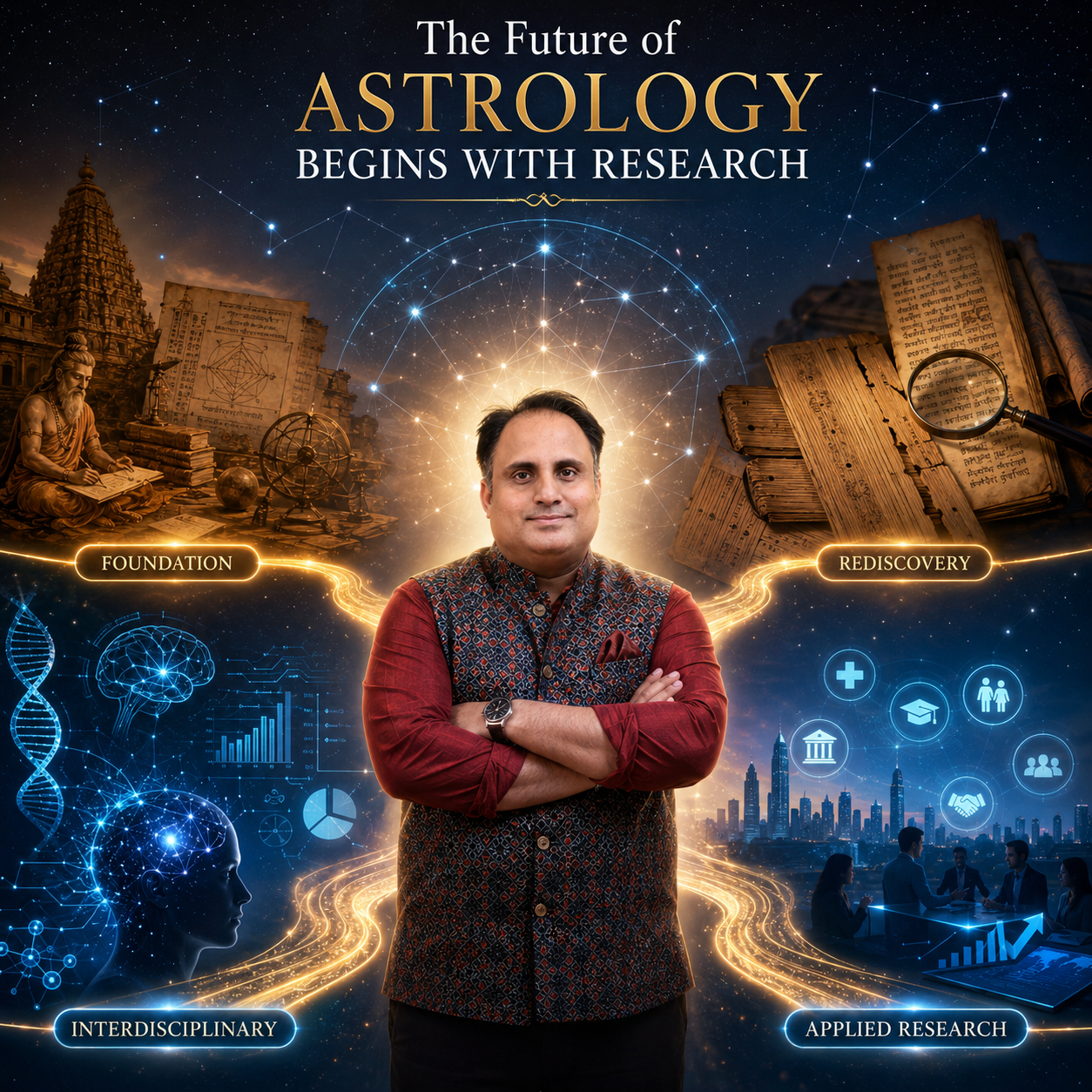
This vision forms the foundation of what I call the Four Layers of Astrological Research.
Layer 1: Foundational Principles Research
Every science evolves by questioning, testing and refining its own foundations. Astrology deserves the same approach.
Many classical principles have been followed for centuries because they have been passed down through tradition. However, today’s generation seeks something more—they seek understanding, consistency and evidence.
This first layer focuses on systematically studying the fundamental building blocks of astrology.
Questions worth exploring include:
- How consistently do different yogas manifest?
- Which combinations demonstrate the highest predictive reliability?
- Under what conditions do planetary combinations become stronger or weaker?
- How do Dashas, Vargas and transits interact across different life situations?
- Which principles remain universally applicable, and which require reinterpretation?
Rather than accepting or rejecting ancient knowledge, this layer encourages us to validate, refine and strengthen it through structured observation and large-scale research.
The stronger our foundations become, the stronger astrology itself becomes.
Layer 2: Rediscovery Research
Not all astrological knowledge has been lost.
Much of it has simply been forgotten.
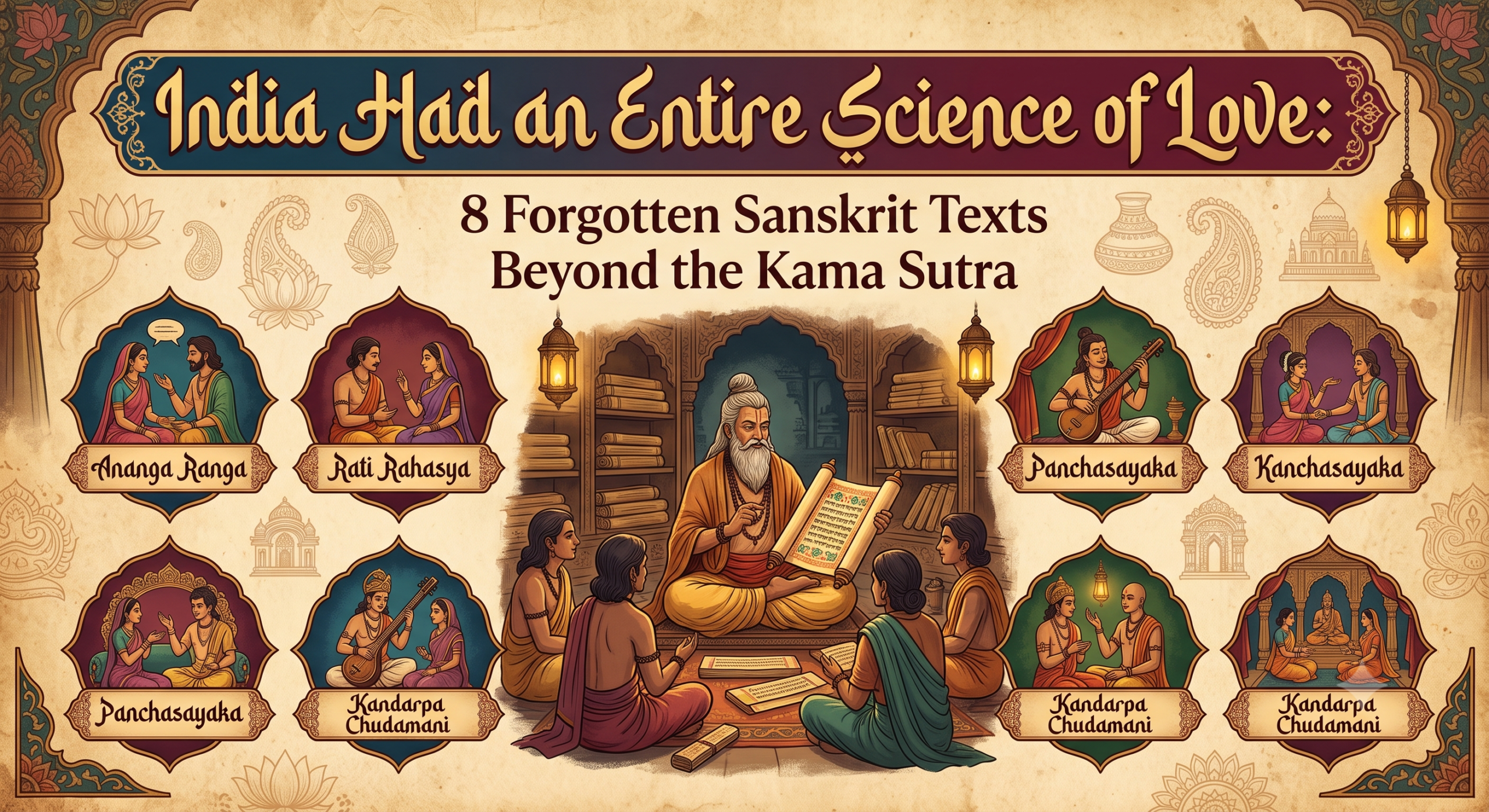
Across India and the world lie manuscripts, regional traditions, commentaries and techniques that remain untranslated, unpublished or unexplored. Entire schools of thought exist only within families, temples or handwritten texts.
Rediscovery research aims to bring this knowledge back into contemporary conversation.
This includes:
- Translating ancient manuscripts
- Comparing multiple classical texts
- Preserving regional astrological traditions
- Documenting oral knowledge before it disappears
- Revisiting forgotten predictive techniques
Innovation does not always mean creating something new.
Sometimes, it means rediscovering something valuable that history left behind.
Layer 3: Interdisciplinary Research
The future of astrology will not be built in isolation.
It will emerge through collaboration.
Astrology has the potential to contribute meaningfully to many modern disciplines, while simultaneously learning from them.
Interdisciplinary research explores how astrology interacts with fields such as:
- Psychology
- Behavioural Science
- Neuroscience
- Medicine and Public Health
- Artificial Intelligence
- Data Science
- Consumer Behaviour
- Business Strategy
- Economics
- Human Resource Management
- Ayurveda
- Vastu
- Yoga
- Meditation
- Spiritual Sciences
Instead of viewing astrology as separate from modern knowledge, this approach positions it as a complementary lens through which human behaviour, decision-making and life patterns can be better understood.
This is where some of the most exciting innovations of the coming decades are likely to emerge.
Layer 4: Applied Research
Knowledge reaches its highest value only when it improves lives.
The fourth layer focuses on translating astrological principles into practical applications with measurable outcomes.
Instead of asking only, “Can astrology predict?”
we begin asking,
“How can astrology help solve real-world problems?”
Applied research may include areas such as:
- Career guidance
- Leadership development
- Business strategy
- Entrepreneurship
- Consumer behaviour
- Relationship counselling
- Education
- Healthcare
- Financial planning
- Political consulting
- Sports performance
- Organisational decision-making
- Human resource management
This shifts astrology from being viewed solely as a predictive discipline to becoming a practical decision-support system.
The greater the number of meaningful applications, the greater the relevance astrology will have in the modern world.
The Future of Astrology Requires Researchers, Not Just Practitioners
For too long, the success of astrology has largely depended on individual practitioners.
The next chapter must be different.
It requires researchers, universities, data scientists, psychologists, physicians, historians, technologists, Sanskrit scholars, statisticians and practising astrologers working together.
The future belongs to those who are willing to ask difficult questions without abandoning ancient wisdom.
Research should not weaken astrology.
It should strengthen it.
It should preserve what works, improve what can be refined and inspire innovations that previous generations never imagined.
My Vision for the Future of Astrology
I envision a future where astrology is recognised not merely as a predictive art but as a multidisciplinary knowledge system capable of contributing to human development, business strategy, healthcare, education and public policy.
A future where ancient wisdom and modern research walk together.
A future where technology supports—not replaces—human intuition.
A future where research becomes an integral part of every serious astrologer’s journey.
Astrology has survived for thousands of years because it evolved with civilisation.
Its next evolution will not come through louder claims.
It will come through deeper research.
And that journey has only just begun.