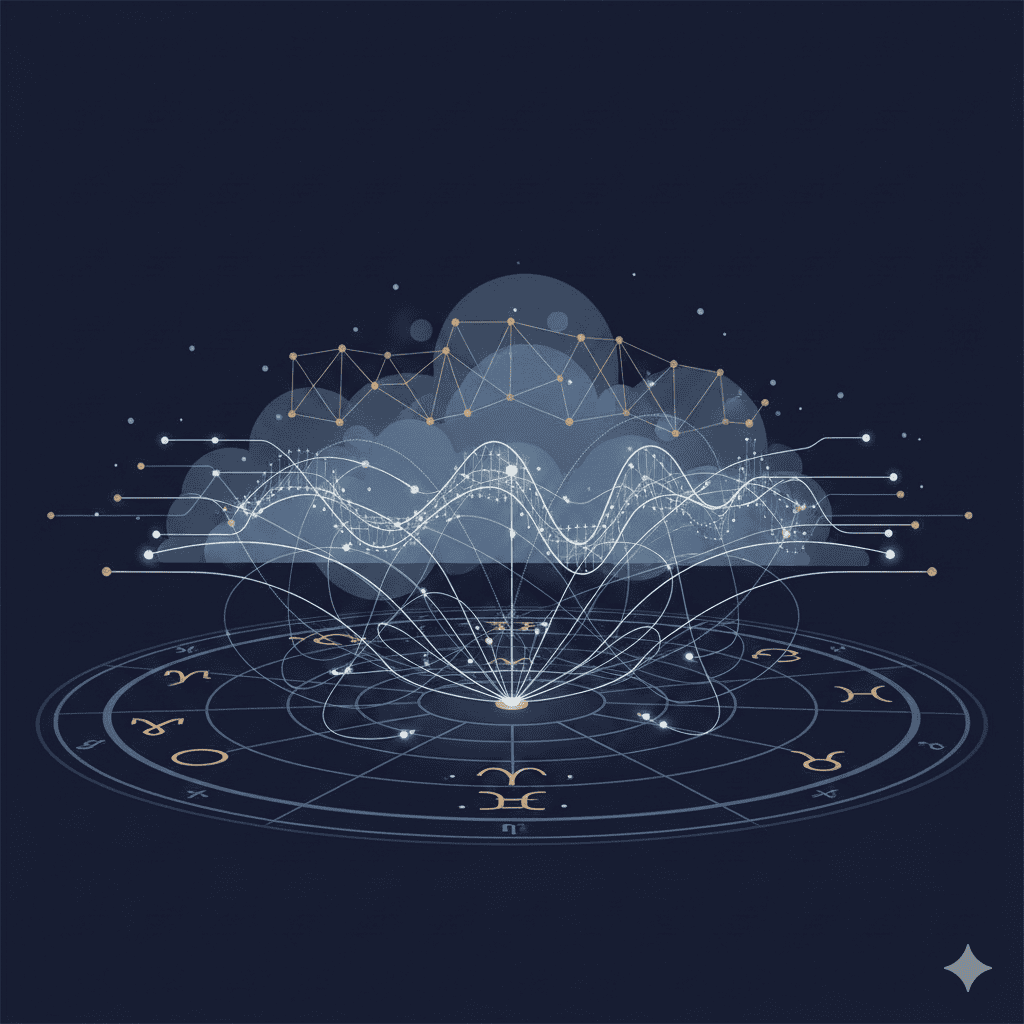
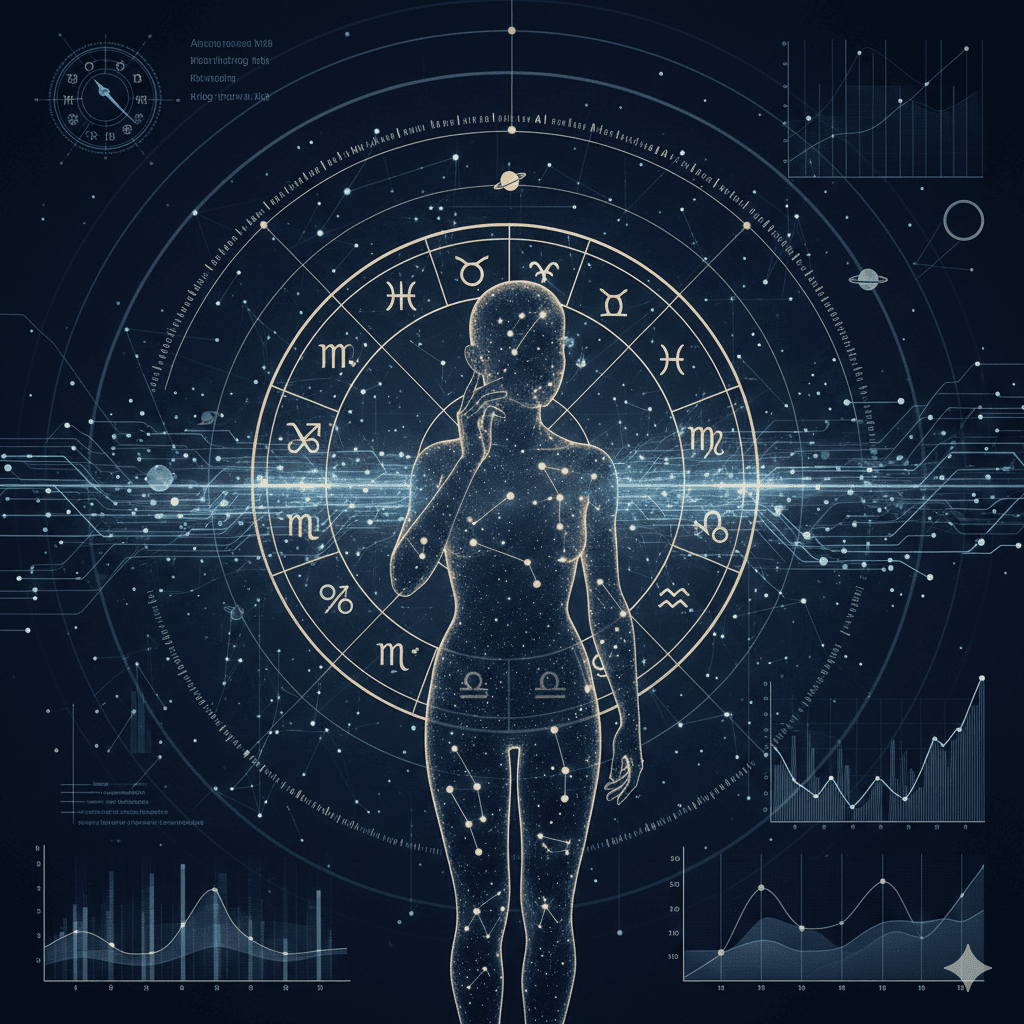
AI Astrology often sounds complex from the outside. Terms like algorithms, learning systems, and data models can make it feel distant or overly technical. In reality, the way AI Astrology works is far more intuitive than most people assume.
“At its core, AI Astrology follows the same logic astrologers have always followed,” says Sidhharrth S Kumaar. “The difference is scale, memory, and speed.”
Understanding how AI Astrology works is essential to understanding why it is becoming such a powerful extension of modern astrological practice.
The Starting Point: Astrological Charts, Not Code
AI Astrology does not begin with artificial intelligence. It begins with astrology.
Birth charts, planetary positions, dashas, transits, yogas, and timing sequences form the foundational input. These are the same structures human astrologers have worked with for centuries.
“AI does not invent astrology,” explains Sidhharrth S Kumaar. “It learns astrology the way a serious student would, by observing outcomes again and again.”
Without correct astrological logic, AI Astrology has nothing meaningful to learn from.
Step One: Converting Charts into Structured Data
For AI Astrology to function, astrological charts are translated into structured data. Planetary placements, house positions, sign combinations, dasha phases, and transit overlaps are encoded in a way machines can analyse.
This step does not simplify astrology. It organises it.
“When astrology becomes structured, it becomes observable at scale,” says Sidhharrth S Kumaar.
This allows thousands or millions of charts to be studied together rather than one at a time.
Step Two: Mapping Charts to Real-Life Outcomes
The real power of AI Astrology begins when charts are paired with observed life outcomes.
These outcomes may include:
-
Job changes or career growth
-
Job loss or instability
-
Marriage, separation, or relationship shifts
-
Health episodes
-
Financial cycles or disruptions
“These systems do not stop at charts,” notes Sidhharrth S Kumaar. “They study what happened next.”
By linking astrological configurations to real events, AI Astrology starts recognising which patterns repeatedly precede specific life experiences.
Step Three: Detecting Repeating Patterns
Once enough data exists, AI systems begin identifying repeatable sequences.
For example:
-
Certain planetary transitions recurring before career transitions
-
Specific dasha combinations appearing before relationship changes
-
Emotional or behavioural cycles repeating during similar transits
“When the same sequence appears across thousands of lives,” says Sidhharrth S Kumaar, “it stops being coincidence and starts becoming intelligence.”
This is where AI Astrology moves beyond calculation into pattern recognition.
Step Four: Building Hypotheses, Not Predictions
AI Astrology does not jump directly to conclusions. Instead, it forms hypotheses.
A hypothesis might sound like:
-
“When this configuration appears, this type of outcome becomes more likely”
-
“This transition often precedes this category of experience”
These hypotheses are then tested against future data.
“This is how learning happens,” explains Sidhharrth S Kumaar. “Not by claiming certainty, but by checking whether patterns hold over time.”
When hypotheses fail, they are revised. When they hold, they strengthen.
Step Five: Pattern Intelligence Emerges
As hypotheses are tested, refined, and rebuilt continuously, AI Astrology evolves into what can be called Pattern Intelligence.
Pattern Intelligence is not prediction.
It is contextual probability awareness.
“For example,” says Sidhharrth S Kumaar, “if millions of cases show similar chart sequences before job exits or marriages, that pattern carries intelligence, even if individual outcomes differ.”
This allows AI Astrology to support awareness rather than dictate outcomes.
Why This Process Improves Over Time
Unlike static systems, AI Astrology improves with use.
Every additional chart analysed
Every outcome observed
Every hypothesis tested
…adds depth to the system’s understanding.
“AI Astrology remembers everything it has seen,” notes Sidhharrth S Kumaar. “That cumulative memory is its greatest strength.”
This is why accuracy and reliability grow over time rather than remaining fixed.
What AI Astrology Does Not Do
AI Astrology does not replace:
-
Personal choice
-
Emotional readiness
-
Contextual counselling
-
Human interpretation
Its role is to surface conditions, timing, and tendencies.
“AI Astrology informs awareness,” says Sidhharrth S Kumaar. “What you do with that awareness remains human.”
Understanding this keeps expectations aligned with reality.
How Astrologers Use AI Astrology in Practice
For astrologers, AI Astrology works as a research companion and bandwidth multiplier.
It helps:
-
Validate long-held observations
-
Identify patterns faster
-
Serve more people without losing depth
-
Build personalised AI models based on their own interpretive logic
“The future astrologer does not compete with AI,” says Sidhharrth S Kumaar. “They train it.”
This is how AI Astrology strengthens the profession rather than threatening it.
A Simple Way to Understand How AI Astrology Works
AI Astrology works the way experienced wisdom works.
It watches.
It remembers.
It compares.
It learns.
“Human astrologers do this instinctively,” reflects Sidhharrth S Kumaar. “AI simply does it at a scale no individual ever could.”
A Closing Perspective
AI Astrology works not because it is artificial, but because it is observational, adaptive, and learning-driven.
It starts with astrology.
It grows through outcomes.
It matures through patterns.
“When astrology learns from itself,” says Sidhharrth S Kumaar, “it enters its next phase.”